
Bud Builders - Making Friends, Growing Cannabis
You are using an out of date browser. It may not display this or other websites correctly.
You should upgrade or use an alternative browser.
You should upgrade or use an alternative browser.
The Psyche Gardens
- Thread starter Observer
- Start date

Observer
Quantum Yield Engineer
- Joined
- May 11, 2023
- Messages
- 8,581
- Reaction score
- 20,567
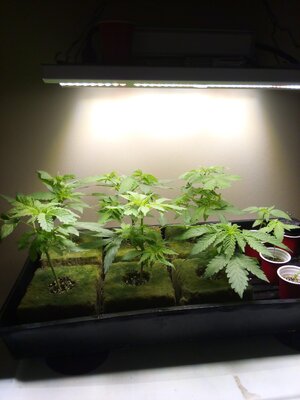
Lights on wake up, bitches (hopefully)
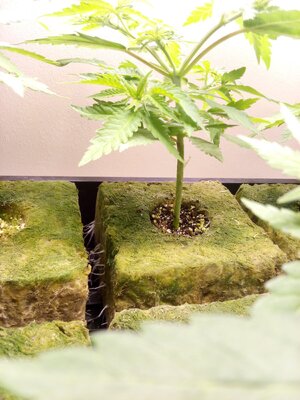
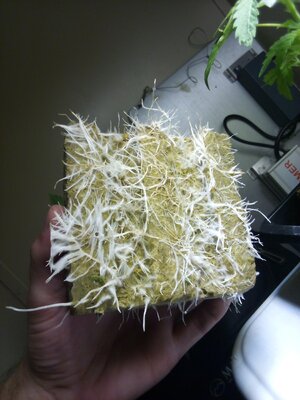
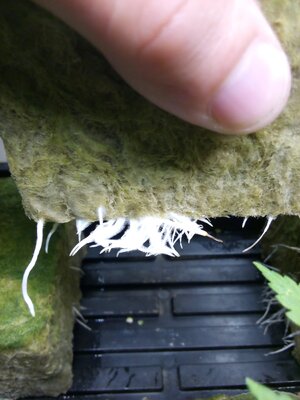
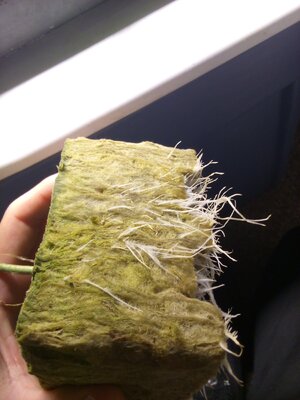
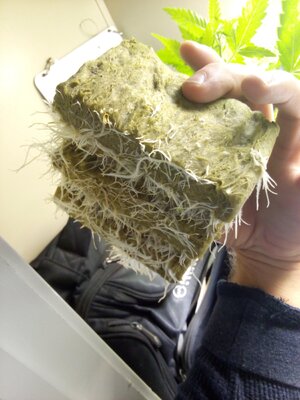
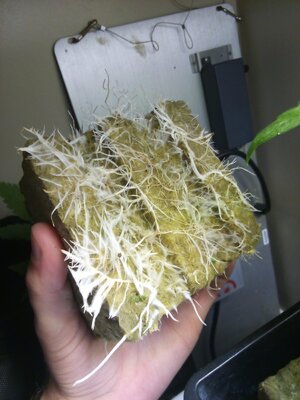
This one is just spitting the roots out
Awesome
This one is just spitting the roots out
Awesome
Attachments
-
 17793835035395865506713561684277.jpg365.5 KB · Views: 3
 -
 17793835557781303198127703144144.jpg572.6 KB · Views: 0
 -
 17793835904078761313120522921937.jpg437.1 KB · Views: 0
 -
 17793836126441274571426664171886.jpg342.2 KB · Views: 0
 -
 17793836237911083418056511843387.jpg393.9 KB · Views: 0
 -
 17793836415637582186979001752776.jpg419.4 KB · Views: 1
 -
 17793836587032061986765020386604.jpg407.5 KB · Views: 5
Observer
Quantum Yield Engineer
- Joined
- May 11, 2023
- Messages
- 8,581
- Reaction score
- 20,567
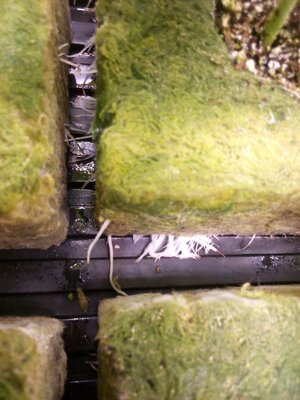
Decaying organic matter when the roots dry out on the sidesI see a reason to leave the wraps on @Bandit420
I just took it off to help airflow since I have no fan
Observer
Quantum Yield Engineer
- Joined
- May 11, 2023
- Messages
- 8,581
- Reaction score
- 20,567
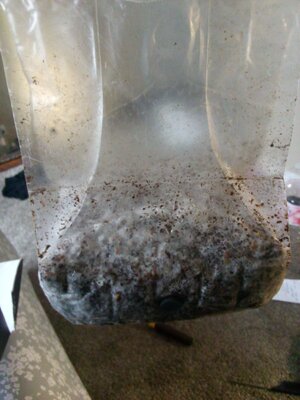
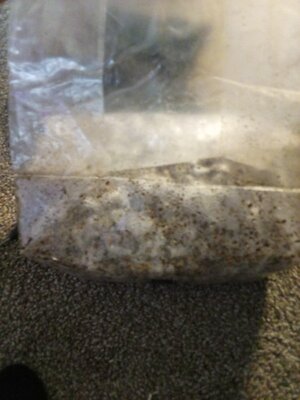

Zen_seeker
POTM Winner 🏆
- Joined
- Apr 16, 2023
- Messages
- 7,118
- Reaction score
- 26,626
You’ve been quiet. Too early to harvest anything so I’m guessing it’s now the busy season for you. I hope things are going well. 
Observer
Quantum Yield Engineer
- Joined
- May 11, 2023
- Messages
- 8,581
- Reaction score
- 20,567
YoooYou’ve been quiet. Too early to harvest anything so I’m guessing it’s now the busy season for you. I hope things are going well.
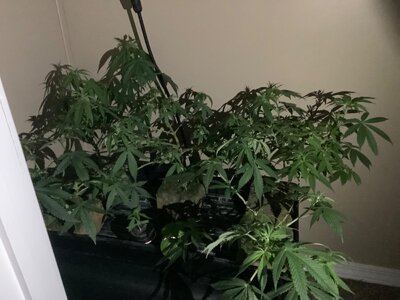
Things went right back to shit more or less but
Observer
Quantum Yield Engineer
- Joined
- May 11, 2023
- Messages
- 8,581
- Reaction score
- 20,567
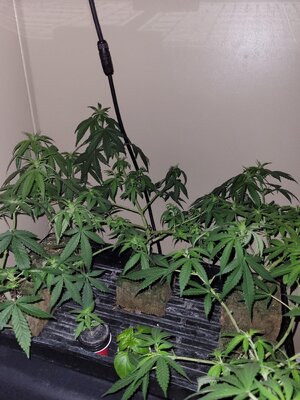
P3, dryback over night, and check if they are ready for P1 irrigation 2hours after lights on
10ml (1000cm volume cube) 1-2% VWC Pulse shots till saturation, NO RUNOFF.
P2 - E.C/pH MAINTAIN Phase, 10ml shots to maintain proper VWC%.
P3 run-off and over night dryback Phase.
Generative cropsteering cues/patterns.
10ml (1000cm volume cube) 1-2% VWC Pulse shots till saturation, NO RUNOFF.
P2 - E.C/pH MAINTAIN Phase, 10ml shots to maintain proper VWC%.
P3 run-off and over night dryback Phase.
Generative cropsteering cues/patterns.
Attachments
Observer
Quantum Yield Engineer
- Joined
- May 11, 2023
- Messages
- 8,581
- Reaction score
- 20,567
My run off E.C came out at a insanely high 4.7, plants look great mostly, showing some tip burnt but, negligible
My solution usually is 0.8-1.2 E.C, but recently I bumped towards 1.7, gradually.
I missed some irrigation windows, hence where the E.C spike must be from.
I've not been treating the rockwool like the high-perfomance media it can be, but now that I have more time and Budding, I will.
Correct course and Sail Forward.
Corrected Nutritient ratio profile and levels.
As of yesterday I started reading again about cropsteering and the proper techniques and formulas and whys and how's again.
Dialing my irrigation strategy now that they have grown a bit and are in flower, I will be following P1, P2, P3 Generative cropsteering techniques.
My solution usually is 0.8-1.2 E.C, but recently I bumped towards 1.7, gradually.
I missed some irrigation windows, hence where the E.C spike must be from.
I've not been treating the rockwool like the high-perfomance media it can be, but now that I have more time and Budding, I will.
Correct course and Sail Forward.
Corrected Nutritient ratio profile and levels.
As of yesterday I started reading again about cropsteering and the proper techniques and formulas and whys and how's again.
Dialing my irrigation strategy now that they have grown a bit and are in flower, I will be following P1, P2, P3 Generative cropsteering techniques.
 Odds.
Odds.
Observer
Quantum Yield Engineer
- Joined
- May 11, 2023
- Messages
- 8,581
- Reaction score
- 20,567
Nutrients Chelation
What is Chelation?
At a basic level, chelation is a chemical process that prevents essential micronutrients (like iron, zinc, copper, and manganese) from locking up in your nutrient reservoir or rockwool.
Without chelation, these metals react with oxygen, carbonates, and phosphates in your water, forming solid, insoluble precipitates (like rust). Once they turn into solids, the plant cannot absorb them, leading to severe nutrient deficiencies.
The Trap: A chelate is an organic molecule (called a ligand) that wraps around a single positively charged metal ion (like $Fe^{2+}$ or $Fe^{3+}$) and binds to it in multiple places.
The Shield: This creates a protective ring or shield around the metal. It blocks outside elements (like phosphorus or high pH hydroxide ions) from attacking and binding to the metal.
The Delivery: The entire chelated complex remains fully water-soluble. When it reaches the roots, the plant breaks the weak chemical bond, pulls the metal inside, and leaves the organic claw behind.
---
The 3 Different Kinds of Chelates (Spelled Out)
1. EDTA (Ethylenediaminetetraacetic acid)
Chemical Formulas: Free acid is C_{10}H_{16}N_2O_8$. Disodium salt dihydrate is C_{10}H_{14}N_2Na_2O_8 \cdot 2H_2O.
pH Stability Range:1.5 – 6.0
How it works: This is the weakest and most common chelate. It holds a tight grip on metals in acidic environments, but the moment your pH climbs past 6.0, the "claw" opens up and drops the iron.
Best Use: Best used for foliar applications. It loses stability rapidly in rockwool or coco if the root zone pH rises above 6.0, causing iron to drop out of solution.
2. DTPA (Diethylenetriaminepentaacetic acid)
Chemical Formulas:Free acid is C_{14}H_{23}N_3O_{10}. Pentasodium salt solution is C_{14}H_{18}N_3Na_5O_{10}.
pH Stability Range: 1.5 – 7.5
How it works:This chelate has more binding sites than EDTA, giving it a much stronger grip on the metal ion. It does not break down when your root zone experiences normal mid-day pH drifts.
Best Use: The industry standard for hydroponics, rockwool, and coco. It keeps iron completely stable and available to the plant even during typical mid-day pH drifts.
3. EDDHA (Ethylenediamine-N,N'-bis(2-hydroxyphenylacetic acid))
Chemical Formula: C_{18}H_{20}N_2O_6$
pH Stability Range: 4.0 – 9.0
How it works:The strongest iron chelate available in agriculture. Its molecular structure completely encapsulates the iron atom, making it practically immune to high pH interference or heavy calcium competition.
Best Use: Used for highly alkaline conditions, soil with heavy calcium carbonate, or hard water setups. It is highly stable but expensive and tints the nutrient solution deep red.
pH Protection:As root zone pH rises, the concentration of hydroxide ions (OH^-) increases.
These ions try to force metals to precipitate out of the water. Stronger chelates (like DTPA) hold onto the metal with a tighter grip, preventing the pH from stripping the nutrient away.
Compatibility:It prevents nutrient lockout in the reservoir, allowing elements like phosphorus and iron to sit in the same tank together without reacting and falling to the bottom as sludge.
What is Chelation?
At a basic level, chelation is a chemical process that prevents essential micronutrients (like iron, zinc, copper, and manganese) from locking up in your nutrient reservoir or rockwool.
Without chelation, these metals react with oxygen, carbonates, and phosphates in your water, forming solid, insoluble precipitates (like rust). Once they turn into solids, the plant cannot absorb them, leading to severe nutrient deficiencies.
The Trap: A chelate is an organic molecule (called a ligand) that wraps around a single positively charged metal ion (like $Fe^{2+}$ or $Fe^{3+}$) and binds to it in multiple places.
The Shield: This creates a protective ring or shield around the metal. It blocks outside elements (like phosphorus or high pH hydroxide ions) from attacking and binding to the metal.
The Delivery: The entire chelated complex remains fully water-soluble. When it reaches the roots, the plant breaks the weak chemical bond, pulls the metal inside, and leaves the organic claw behind.
---
The 3 Different Kinds of Chelates (Spelled Out)
1. EDTA (Ethylenediaminetetraacetic acid)
Chemical Formulas: Free acid is C_{10}H_{16}N_2O_8$. Disodium salt dihydrate is C_{10}H_{14}N_2Na_2O_8 \cdot 2H_2O.
pH Stability Range:1.5 – 6.0
How it works: This is the weakest and most common chelate. It holds a tight grip on metals in acidic environments, but the moment your pH climbs past 6.0, the "claw" opens up and drops the iron.
Best Use: Best used for foliar applications. It loses stability rapidly in rockwool or coco if the root zone pH rises above 6.0, causing iron to drop out of solution.
2. DTPA (Diethylenetriaminepentaacetic acid)
Chemical Formulas:Free acid is C_{14}H_{23}N_3O_{10}. Pentasodium salt solution is C_{14}H_{18}N_3Na_5O_{10}.
pH Stability Range: 1.5 – 7.5
How it works:This chelate has more binding sites than EDTA, giving it a much stronger grip on the metal ion. It does not break down when your root zone experiences normal mid-day pH drifts.
Best Use: The industry standard for hydroponics, rockwool, and coco. It keeps iron completely stable and available to the plant even during typical mid-day pH drifts.
3. EDDHA (Ethylenediamine-N,N'-bis(2-hydroxyphenylacetic acid))
Chemical Formula: C_{18}H_{20}N_2O_6$
pH Stability Range: 4.0 – 9.0
How it works:The strongest iron chelate available in agriculture. Its molecular structure completely encapsulates the iron atom, making it practically immune to high pH interference or heavy calcium competition.
Best Use: Used for highly alkaline conditions, soil with heavy calcium carbonate, or hard water setups. It is highly stable but expensive and tints the nutrient solution deep red.
pH Protection:As root zone pH rises, the concentration of hydroxide ions (OH^-) increases.
These ions try to force metals to precipitate out of the water. Stronger chelates (like DTPA) hold onto the metal with a tighter grip, preventing the pH from stripping the nutrient away.
Compatibility:It prevents nutrient lockout in the reservoir, allowing elements like phosphorus and iron to sit in the same tank together without reacting and falling to the bottom as sludge.
Zen_seeker
POTM Winner 🏆
- Joined
- Apr 16, 2023
- Messages
- 7,118
- Reaction score
- 26,626
What? How? You still working at the golf course?Yooo
Things went right back to shit more or less but
Observer
Quantum Yield Engineer
- Joined
- May 11, 2023
- Messages
- 8,581
- Reaction score
- 20,567
nopeWhat? How? You still working at the golf course?
Observer
Quantum Yield Engineer
- Joined
- May 11, 2023
- Messages
- 8,581
- Reaction score
- 20,567
| Additive Name | Primary Active Ingredients | Main Function & Purpose |
| Snow Storm Ultra (0-0-3) | Potassium Hydroxide (KOH), Salicylic Acid, Amino Acids | Triggers a mock heat-stress response, forcing extreme trichome, terpene, and essential oil accumulation. |
| Purple Maxx (Formerly Stacker) | Potassium Hydroxide (KOH), Humic Acids (from leonardite), Organic Carbon, Trace Minerals | An amino acid-based metabolic trigger designed to force intense color/purpling expression and tight flower stacking. |
| Deep Breath | Salicylic Acid, Honey, Plant-Specific Amino Acids* | Primes the plant's metabolic pathways to shorten cycles and force explosive early honeycombing. |
| G10 (Gravitation) | Complex Plant Extracts, Proprietary Organic Compounds, Vitamin B-Complex | Used from mid-to-late bloom to swell flower mass and expand calyx size without synthetic PGRs. |
| Crystal Burst (0-15-15) | Liquid Potassium Phosphate (KH2PO4), Vitamin B1 (Thiamine) | High-strength liquid bloom booster formulated to drive heavy flower mass without cold-temperature crystallization. |
Plant-Specific Amino Acids*
L-Glutamic Acid & L-Aspartic Acid: These are the foundational building blocks. They act as nitrogen donors, helping the plant synthesize all other necessary amino acids and keeping chlorophyll production high.
L-Glycine & L-Glutamic Acid: These amino acids are critical for chelating metals within the plant tissue. They bind to micronutrients, making them incredibly easy for the plant to transport through its vascular system to the bud sites.
L-Arginine & L-Methionine: These act as direct precursors to flowering hormones. Methionine is also a precursor to ethylene, which regulates maturation, while Arginine aids in overall root growth and nutrient absorption.
Free Sample Additives ill be using Through flower
Last edited:

- Joined
- Apr 19, 2023
- Messages
- 6,688
- Reaction score
- 32,976
Additive Name Primary Active Ingredients Main Function & Purpose Snow Storm Ultra (0-0-3) Potassium Hydroxide (KOH), Salicylic Acid, Amino Acids Triggers a mock heat-stress response, forcing extreme trichome, terpene, and essential oil accumulation. Purple Maxx (Formerly Stacker) Potassium Hydroxide (KOH), Humic Acids (from leonardite), Organic Carbon, Trace Minerals An amino acid-based metabolic trigger designed to force intense color/purpling expression and tight flower stacking. Deep Breath Salicylic Acid, Honey, Plant-Specific Amino Acids* Primes the plant's metabolic pathways to shorten cycles and force explosive early honeycombing. G10 (Gravitation) Complex Plant Extracts, Proprietary Organic Compounds, Vitamin B-Complex Used from mid-to-late bloom to swell flower mass and expand calyx size without synthetic PGRs. Crystal Burst (0-15-15) Liquid Potassium Phosphate (KH2PO4), Vitamin B1 (Thiamine) High-strength liquid bloom booster formulated to drive heavy flower mass without cold-temperature crystallization.
Plant-Specific Amino Acids*
L-Glutamic Acid & L-Aspartic Acid: These are the foundational building blocks. They act as nitrogen donors, helping the plant synthesize all other necessary amino acids and keeping chlorophyll production high.
L-Glycine & L-Glutamic Acid: These amino acids are critical for chelating metals within the plant tissue. They bind to micronutrients, making them incredibly easy for the plant to transport through its vascular system to the bud sites.
L-Arginine & L-Methionine: These act as direct precursors to flowering hormones. Methionine is also a precursor to ethylene, which regulates maturation, while Arginine aids in overall root growth and nutrient absorption.
Free Sample Additives ill be using Through flower
my favorite brand.... very low N compared to other brands and 100% safe for germination/seedlings.

.
hey man.... get a job!!!

Zen_seeker
POTM Winner 🏆
- Joined
- Apr 16, 2023
- Messages
- 7,118
- Reaction score
- 26,626
Dude!?Lol
Living in a manufactured home till July 31st though.
Coworker hit me, I hit him back. -self dense.
Both fired, short story short.
Wife got a promotion though.
Still hanging in there
Zen_seeker
POTM Winner 🏆
- Joined
- Apr 16, 2023
- Messages
- 7,118
- Reaction score
- 26,626

(Not that I’m doing any better…)
Observer
Quantum Yield Engineer
- Joined
- May 11, 2023
- Messages
- 8,581
- Reaction score
- 20,567
So no more P2P3, dryback over night, and check if they are ready for P1 irrigation 2hours after lights on
10ml (1000cm volume cube) 1-2% VWC Pulse shots till saturation, NO RUNOFF.
P2 - E.C/pH MAINTAIN Phase, 10ml shots to maintain proper VWC%.
P3 run-off and over night dryback Phase.
Generative cropsteering cues/patterns.
Just P1 and P3
P1 ramp up to VWC Saturation point, 2-4% shot size, every 30 minutes, 5-20% Runoff volume to rinse out unused salt and buildup
do not oversaturate in one go; to keep O² levels high.
NO IRRIGATION 2-4hours BEFORE lights go off.
Heavy over night dry back.
Input E.C 1.2 - 1.5 E.C, output E.C today was 2.2 E.C, 6.1 pH
Input ph is 5.6-5.8.
Observer
Quantum Yield Engineer
- Joined
- May 11, 2023
- Messages
- 8,581
- Reaction score
- 20,567
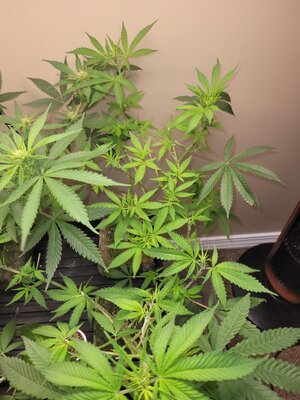
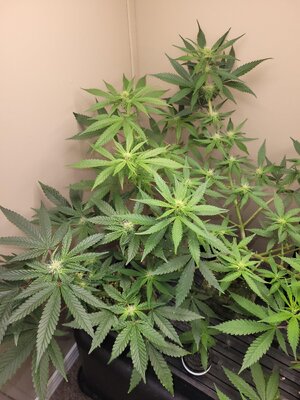
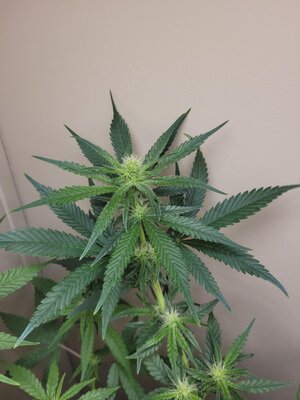
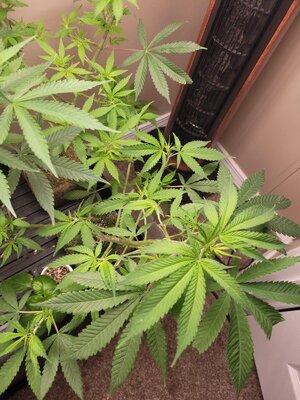
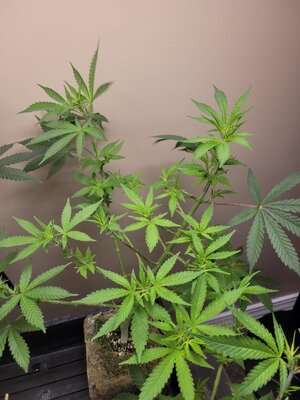
Pushing towards 1000 PPFD and seeing how they handle it.
Sitting under 800 PPFD right now, 1.5 E.C input.
Currently around 700 PPFD
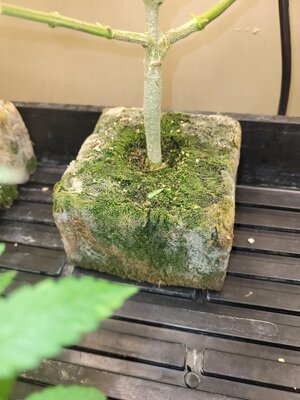
Blocks are contaminated as fuck.
Plants don't seem to care though.
1-3ml 34% h²o² every half gallon.
Sitting under 800 PPFD right now, 1.5 E.C input.
Currently around 700 PPFD
Blocks are contaminated as fuck.
Plants don't seem to care though.
1-3ml 34% h²o² every half gallon.
Attachments
-
 1781740283421348469682427216326.jpg559.7 KB · Views: 1
 -
 1781740265243580979348587090885.jpg634.6 KB · Views: 1
 -
 178174018555114488367819790443.jpg613.1 KB · Views: 1
 -
 17817401778333102273014830747554.jpg761.5 KB · Views: 1
 -
 17817401627371006512166568293298.jpg625.1 KB · Views: 1
 -
 17817403371545094929386774686732.jpg437.7 KB · Views: 1
 -
 17817403596028242288702611164265.jpg602.5 KB · Views: 1
 -
 17817403666921195450196487050895.jpg716.4 KB · Views: 0
 -
 17817403776492503159138781116596.jpg535.3 KB · Views: 0
 -
 17817403893957905641112340926321.jpg659.7 KB · Views: 1
Observer
Quantum Yield Engineer
- Joined
- May 11, 2023
- Messages
- 8,581
- Reaction score
- 20,567
I'll lift the blocks overnight to check they aren't drying back too much, and may give a shot over night to maintain the blocks VWC%, pH & E.C Balance.
Manually attempting Generative cropsteering pattern
Need to get a substrate vwc sensor so I can match the patterns and feels to the numbers.
Rockwool holds about 80% water and 20% air so at 75-80% VWC the block will drip slightly.
Manually attempting Generative cropsteering pattern
Need to get a substrate vwc sensor so I can match the patterns and feels to the numbers.
Rockwool holds about 80% water and 20% air so at 75-80% VWC the block will drip slightly.
Observer
Quantum Yield Engineer
- Joined
- May 11, 2023
- Messages
- 8,581
- Reaction score
- 20,567
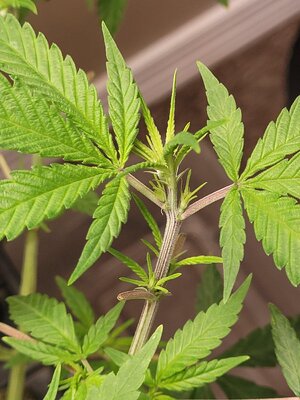
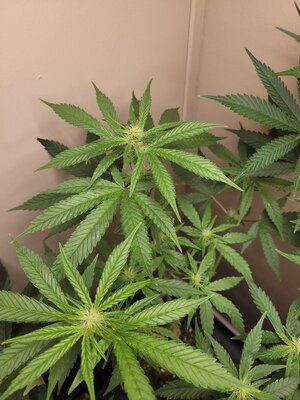
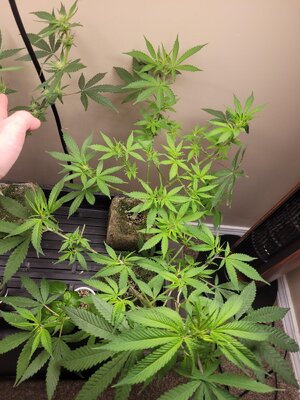
These right 2 plants are acting "stalled out"
Grow the damn buds already lol
Hmm
Grow the damn buds already lol
Hmm
Attachments

Observer
Quantum Yield Engineer
- Joined
- May 11, 2023
- Messages
- 8,581
- Reaction score
- 20,567
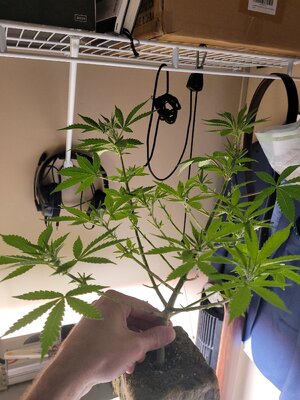
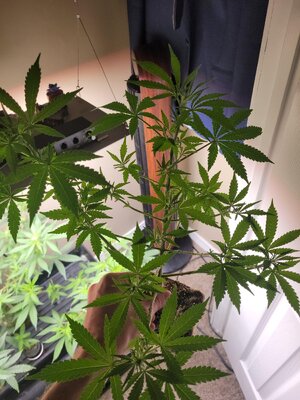
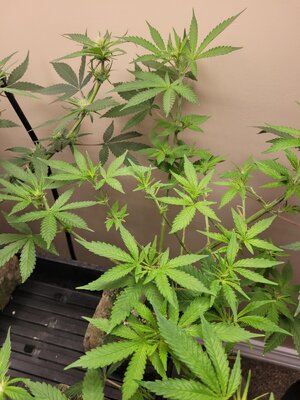
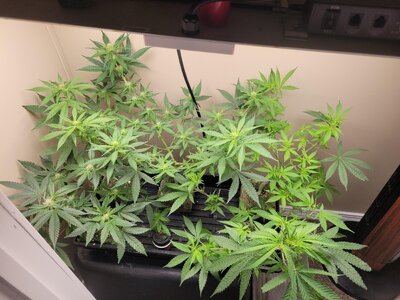
=)
Attachments
-
 17817407130807206610102778389607.jpg656.4 KB · Views: 1
 -
 17817407317028429907988949510054.jpg595.6 KB · Views: 0
 -
 17817407415187327901899028720347.jpg517.4 KB · Views: 0
 -
 17817407634388775565476642179478.jpg630.2 KB · Views: 0
 -
 17817407729776346807245362400672.jpg475.5 KB · Views: 1
 -
 17817407847475041140895866304535.jpg748.4 KB · Views: 1
Observer
Quantum Yield Engineer
- Joined
- May 11, 2023
- Messages
- 8,581
- Reaction score
- 20,567
Plants look mostly great with the 4.7 e.c spike overnight dry back, I'm attempting to dial my E.C within +-0.5 Points, lowered my e.c and my run off e.c has decreased to 2.0 flushed out some unused salts.had a run off of 4.7 E.C
input E.C is 1.2 - 1.7 E.C
pH input is 5.7-5.9
Salt-Nutrient profile is 10-14-26
+ 60-100ppm of Epsom Salt
They have been drying back since 530, it's 707 now, lights off at 1130 instead of 12 tonight, trying to promote the florigen hormone, I suspect I will need to do some maintain shots over night, getting them back on a proper irrigation schedule & dryback schedule.
Florigen is the hypothetical mobile hormone long postulated by botanists to trigger flowering in angiosperms.
Modern research reveals it is actually a mobile protein, primarily encoded by the FT (FLOWERING LOCUS T) gene, that is synthesized in leaves and travels to the shoot apex to initiate the switch from vegetative to reproductive growth.
Zen_seeker
POTM Winner 🏆
- Joined
- Apr 16, 2023
- Messages
- 7,118
- Reaction score
- 26,626
I think you’ll enjoy this one.
- Joined
- Apr 19, 2023
- Messages
- 6,688
- Reaction score
- 32,976
We got a House.
sounds like great news, tell us more about it!!
Observer
Quantum Yield Engineer
- Joined
- May 11, 2023
- Messages
- 8,581
- Reaction score
- 20,567
Tomato yield enhancement with plasma-activated water as an alternative nitrogen source - PMC
Non-thermal plasma has recently gained popularity in agriculture for their potential applications in precultivation, cultivation, and postharvest processes. Plasma-treated seeds exhibit enhanced plant growth, and their fruits can be stored for ...
 pmc.ncbi.nlm.nih.gov
Zen_seeker
POTM Winner 🏆
- Joined
- Apr 16, 2023
- Messages
- 7,118
- Reaction score
- 26,626
You’ve been quiet. What’s up?We got a House.

Shaded
Organic Soil Wizard
- Joined
- Apr 15, 2023
- Messages
- 401
- Reaction score
- 2,989
We got a House.
Damn...no more hotel bathroom selfies with you wearing a scarf?

Congrats dude

Zen_seeker
POTM Winner 🏆
- Joined
- Apr 16, 2023
- Messages
- 7,118
- Reaction score
- 26,626
New house, new job, a tray of plants from the hotel room. Then crickets.
I see you’ve been logged in a few times but no posts. What’s up?
I hope things work out this time.
I see you’ve been logged in a few times but no posts. What’s up?
I hope things work out this time.
Love to grow
Stoned Scientist
- Joined
- Jul 30, 2026
- Messages
- 31
- Reaction score
- 134
Gday ol mate observer how’s things been? Hope you and the family doing good mate
Observer
Quantum Yield Engineer
- Joined
- May 11, 2023
- Messages
- 8,581
- Reaction score
- 20,567
its a rollercoaster of mistakes and fuck ups but we are trying to get it right.Gday ol mate observer how’s things been? Hope you and the family doing good mate
thank you, and thank everyone else so much.
i will return eventually.
i got my 5x5 tent in the garage, i spent 2 hours hosing it down and cleaning it.
its just a matter of time before i load it up.
Observer
Quantum Yield Engineer
- Joined
- May 11, 2023
- Messages
- 8,581
- Reaction score
- 20,567
me too man....me too.....New house, new job, a tray of plants from the hotel room. Then crickets.
I see you’ve been logged in a few times but no posts. What’s up?
I hope things work out this time.
ugh.
2 weeks in after getting the house things went to shit.
"Faithfulness" Issues with my partner....
im too embarrassed/ashamed to show my face and dont have internet half the time currently.
not appropriate to talk "publicly" here about it.
but i cant not be honest or speak
Last edited:
Similar threads

- Replies
- 11
- Views
- 656

- Replies
- 1
- Views
- 463


