
Bud Builders - Making Friends, Growing Cannabis

Register a free account today to become a Bud Builders member! Once signed in, you'll be able to participate on our site by adding your own topics and posts, as well as connect with other members through your own private inbox.

Join the fun and make some friends!

The Psyche Gardens

  • Volumetric Water Content (VWC%)
    • The volume of water a substrate is holding at any given time.
  • Field Capacity
    • The maximum VWC% of a substrate/media prior to run off.
  • Full Saturation
    • When a substrate/media can no longer hold anymore water and peak VWC% can no longer increase.
  • Pore Water EC (PwEC)
    • The EC of the water within the pores of the substrate or media. This is also called Substrate EC.
  • Input EC
    • The EC of the feed water, or the solution that is being fed through irrigation events.
  • Shot
    • A single irrigation event
  • Run Off
    • Water that is drained from the substrate
  • Dryback
    • The period between irrigation events when the substrate is drying out.
  • EC Stacking
    • The strategy of limiting run off and having larger overnight drybacks to increase the substrate EC.
  • Crop Steering
    • “An advanced cultivation technique that manipulates key factors of growing, such as irrigation, temperature, humidity, and light to precisely guide plant growth towards desired outcomes”
  • Generative
    • A crop steering strategy that means having a larger dryback, a higher substrate EC, and encourages Generative Growth, which means the plant will focus on flower site formation (stacking) and not on vertical growth or green leaf growth. Sometimes referred to as “stressing” the plant.
  • Vegetative
    • A crop steering strategy that means having a smaller dryback, a lower substrate EC and encourages Vegetative Growth, which means the plant will focus on growing vertically and swelling (bulk) of the bud sites that are already there. This will also produce new green leaf growth. Sometimes referred to as “less stress” to the plant.
  • P0/P1/P2/P3
    • Different phases of irrigation events.
    • P0- The amount of dryback/decrease in water content after the lights turn on, but before the first irrigation event.
    • P1- the first irrigation events after lights are on. This brings the substrate/media to “field capacity” and desired run off
    • P2- Maintenance shots during lights on. P2 feeds are how you control how much dryback you have.
    • P3- Overnight dryback, from the last P2 feed to when lights turn on again.
  • Veg
    • The phase of growth after the seeding state but before flowering stage.
  • Flower
    • The phase of growth while the plant is producing mature flowers
  • Stretch
    • The first 1-4 weeks of the flowering phase, where most genetics will perform their “stretch” and see 2x-5x vertical growth.
  • Bulk
    • Part of the flowering phase where the plant is putting on weight, typically weeks 5-7/8
  • Finish
    • The end of the flowering phase, initiating senescence aka the end of life for the plant. When the plant starts to express its colors and its terpenes the most.
  • Senescence
    • The gradual deterioration of functional characteristics in living organisms.
View attachment 79283
@Zen_seeker sup man
 
  • Volumetric Water Content (VWC%)
    • The volume of water a substrate is holding at any given time.
  • Field Capacity
    • The maximum VWC% of a substrate/media prior to run off.
  • Full Saturation
    • When a substrate/media can no longer hold anymore water and peak VWC% can no longer increase.
  • Pore Water EC (PwEC)
    • The EC of the water within the pores of the substrate or media. This is also called Substrate EC.
  • Input EC
    • The EC of the feed water, or the solution that is being fed through irrigation events.
  • Shot
    • A single irrigation event
  • Run Off
    • Water that is drained from the substrate
  • Dryback
    • The period between irrigation events when the substrate is drying out.
  • EC Stacking
    • The strategy of limiting run off and having larger overnight drybacks to increase the substrate EC.
  • Crop Steering
    • “An advanced cultivation technique that manipulates key factors of growing, such as irrigation, temperature, humidity, and light to precisely guide plant growth towards desired outcomes”
  • Generative
    • A crop steering strategy that means having a larger dryback, a higher substrate EC, and encourages Generative Growth, which means the plant will focus on flower site formation (stacking) and not on vertical growth or green leaf growth. Sometimes referred to as “stressing” the plant.
  • Vegetative
    • A crop steering strategy that means having a smaller dryback, a lower substrate EC and encourages Vegetative Growth, which means the plant will focus on growing vertically and swelling (bulk) of the bud sites that are already there. This will also produce new green leaf growth. Sometimes referred to as “less stress” to the plant.
  • P0/P1/P2/P3
    • Different phases of irrigation events.
    • P0- The amount of dryback/decrease in water content after the lights turn on, but before the first irrigation event.
    • P1- the first irrigation events after lights are on. This brings the substrate/media to “field capacity” and desired run off
    • P2- Maintenance shots during lights on. P2 feeds are how you control how much dryback you have.
    • P3- Overnight dryback, from the last P2 feed to when lights turn on again.
  • Veg
    • The phase of growth after the seeding state but before flowering stage.
  • Flower
    • The phase of growth while the plant is producing mature flowers
  • Stretch
    • The first 1-4 weeks of the flowering phase, where most genetics will perform their “stretch” and see 2x-5x vertical growth.
  • Bulk
    • Part of the flowering phase where the plant is putting on weight, typically weeks 5-7/8
  • Finish
    • The end of the flowering phase, initiating senescence aka the end of life for the plant. When the plant starts to express its colors and its terpenes the most.
  • Senescence
    • The gradual deterioration of functional characteristics in living organisms.
View attachment 79283
Note*

Vegetative irrigation during Veg cycle

Generative irrigation through "flower" weeks 1-3/1-4
Can Vg during first 10 days of Flower with some cultivars*

Vegetative irrigation after, weeks 3/4-7

Generative irrigation when ripening, week 7-9*

Irrigation cycle is based on % volume of substrate media, = VMW %

Vg = 1-4%
Gv = 4-8%

=)
 
Last edited:
  • Volumetric Water Content (VWC%)
    • The volume of water a substrate is holding at any given time.
  • Field Capacity
    • The maximum VWC% of a substrate/media prior to run off.
  • Full Saturation
    • When a substrate/media can no longer hold anymore water and peak VWC% can no longer increase.
  • Pore Water EC (PwEC)
    • The EC of the water within the pores of the substrate or media. This is also called Substrate EC.
  • Input EC
    • The EC of the feed water, or the solution that is being fed through irrigation events.
  • Shot
    • A single irrigation event
  • Run Off
    • Water that is drained from the substrate
  • Dryback
    • The period between irrigation events when the substrate is drying out.
  • EC Stacking
    • The strategy of limiting run off and having larger overnight drybacks to increase the substrate EC.
  • Crop Steering
    • “An advanced cultivation technique that manipulates key factors of growing, such as irrigation, temperature, humidity, and light to precisely guide plant growth towards desired outcomes”
  • Generative
    • A crop steering strategy that means having a larger dryback, a higher substrate EC, and encourages Generative Growth, which means the plant will focus on flower site formation (stacking) and not on vertical growth or green leaf growth. Sometimes referred to as “stressing” the plant.
  • Vegetative
    • A crop steering strategy that means having a smaller dryback, a lower substrate EC and encourages Vegetative Growth, which means the plant will focus on growing vertically and swelling (bulk) of the bud sites that are already there. This will also produce new green leaf growth. Sometimes referred to as “less stress” to the plant.
  • P0/P1/P2/P3
    • Different phases of irrigation events.
    • P0- The amount of dryback/decrease in water content after the lights turn on, but before the first irrigation event.
    • P1- the first irrigation events after lights are on. This brings the substrate/media to “field capacity” and desired run off
    • P2- Maintenance shots during lights on. P2 feeds are how you control how much dryback you have.
    • P3- Overnight dryback, from the last P2 feed to when lights turn on again.
  • Veg
    • The phase of growth after the seeding state but before flowering stage.
  • Flower
    • The phase of growth while the plant is producing mature flowers
  • Stretch
    • The first 1-4 weeks of the flowering phase, where most genetics will perform their “stretch” and see 2x-5x vertical growth.
  • Bulk
    • Part of the flowering phase where the plant is putting on weight, typically weeks 5-7/8
  • Finish
    • The end of the flowering phase, initiating senescence aka the end of life for the plant. When the plant starts to express its colors and its terpenes the most.
  • Senescence
    • The gradual deterioration of functional characteristics in living organisms.
View attachment 79283
 

Attachments

Copper is not removed easily once installed.
It kills invertebrates and is known for antibacterial qualities.
I have considered using actual copper in contact with soil.
 
Copper is not removed easily once installed.
It kills invertebrates and is known for antibacterial qualities.
I have considered using actual copper in contact with soil.
Ya its nasty shit it kills all the tadpoles if I put it in the spring. We put in an arerotor couple years back and I have been trying to hit it with bacteria when I can ,we have alot less blooms now but still have to use the copper a little.tried barley straw and corn meal and different stuff.even raked it all out one year.i won't be raking it again that's for sure.😁
 
Copper is not removed easily once installed.
It kills invertebrates and is known for antibacterial qualities.
I have considered using actual copper in contact with soil.
Some commercial Agricultural farms do Copper Ionization Treatment to their water source, effectively killing and controlling bacteria, viruses, and other microorganisms, then I saw copper sulfate crystals again, and that made me wonder about using copper sulfate as a root treatment or foliar for any unwanted microORGs/ it helps control mildew as well.
 
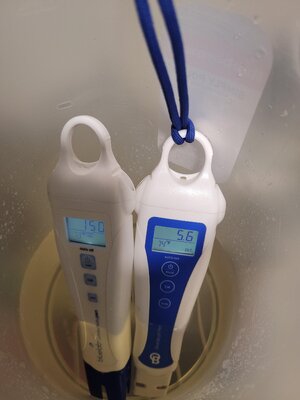
5.4 pH
180 PPM

1 Litre Tap
5-12-26
0.# Grams of potassium sulfate + Magnesium Sulfate +
soluble KELP
2mL hypochlorus acid.

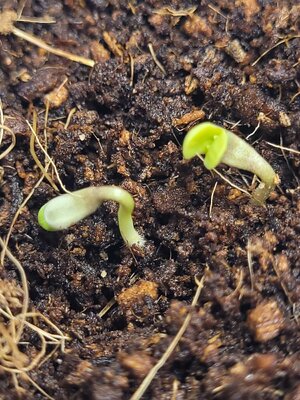
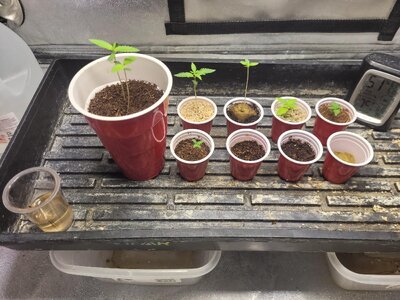
Those fuzzy root hairs
 

Attachments

  • 173199633524671495207033215858.jpg
    173199633524671495207033215858.jpg
    726.1 KB · Views: 7
  • 17319963227092134187587863015528.jpg
    17319963227092134187587863015528.jpg
    683.5 KB · Views: 4
  • 17319962787955714318529340024521.jpg
    17319962787955714318529340024521.jpg
    705 KB · Views: 6
  • 17319962473876609821868400538000.jpg
    17319962473876609821868400538000.jpg
    1.1 MB · Views: 18
Some commercial Agricultural farms do Copper Ionization Treatment to their water source, effectively killing and controlling bacteria, viruses, and other microorganisms, then I saw copper sulfate crystals again, and that made me wonder about using copper sulfate as a root treatment or foliar for any unwanted microORGs/ it helps control mildew as well.
And that made me wonder if I could use Copper Sulfate Crystals as a "slow-
release microorganism controller"

And it appears I could?!?


Copper sulfate crystals can be used as a slow-release microorganism controller in a reservoir, but it's important to use them cautiously and responsibly. Here's what you need to know:


How Copper Sulfate Works:

Copper sulfate is a broad-spectrum algicide and bactericide.
It works by interfering with the metabolism of microorganisms, inhibiting their growth and reproduction.

Copper ions are released slowly from the crystals, providing a continuous low-level treatment.
Benefits of Using Copper Sulfate Crystals:

Slow Release: The crystal form allows for a gradual release of copper ions, minimizing the risk of overdosing.

Long-lasting Effect: Copper sulfate crystals can provide extended protection against microorganisms.
Ease of Use: Crystals can be easily placed in strategic locations within the reservoir
 
I think you will kill your plants. Cooper is a micro nutrient and above the typical levels will easily cause toxicity issues. The small amount we see in some products i think will be very hard to dose accurately because we are talking very small numbers in terms of ppm.

Why not a natural fungicide?
 
I think you will kill your plants. Cooper is a micro nutrient and above the typical levels will easily cause toxicity issues. The small amount we see in some products i think will be very hard to dose accurately because we are talking very small numbers in terms of ppm.

Why not a natural fungicide?
Was just an idea that came to mind, after hearing about copper Ionization Water Treatment some time ago, and then copper sulfate crystals as a "slow release" for a Res.
 
Are you comparing different medias?
Nah I did that experiment a year or two back

But since you asked

It seems you can get higher root density In 100% vermiculite over 100% coco

100% perlite breathes the best but depending on the size of perlite the root structure/density seems to lack.

But to confirm results I'd have to run a few times.

I just didn't have any other media so I uses some perlite for the first few seeds there, then got some coco, and I'm just running that 100% no mix, this time.

Strict(er) on the fertigation schedule.
 
Last edited:
Nah I did that experiment a year or two back

But since you asked

It seems you can get higher root density In 100% vermiculite over 100% coco

100% perlite breathes the best but depending on the size of perlite the root structure/density seems to lack.

But to confirm results I'd have to run a few times.

I just didn't have any other media so I uses some perlite for the first few seeds there, then got some coco, and I'm just running that 100% no mix, this time.

Strict(er) on the fertigation schedule.
oh and not sure about rockwool, probably more than coco, id think .
 
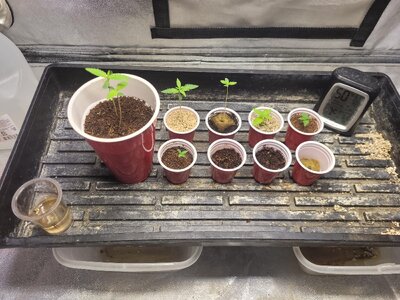
Much wind
Little pot
Fast dryback

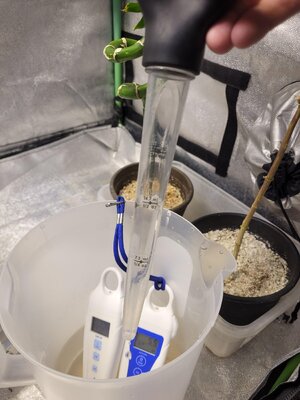
Gotta make some more nutrient solution, going to do a different ratio this time.

Gonna hit em with some 15-0-0 nitrogen and some potassium sulfate, with a dash of 9-12-28 maybe
 

Attachments

  • 17324851255966403271866731525678.jpg
    17324851255966403271866731525678.jpg
    769.6 KB · Views: 2
  • 17324851425614806017785392065950.jpg
    17324851425614806017785392065950.jpg
    1 MB · Views: 2
  • 17324851566807033541837973462446.jpg
    17324851566807033541837973462446.jpg
    876.7 KB · Views: 4
  • 17324854596897647859883864735588.jpg
    17324854596897647859883864735588.jpg
    781.7 KB · Views: 6
Last edited:
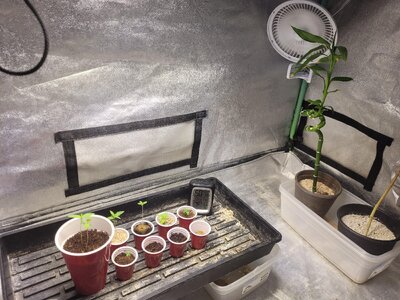
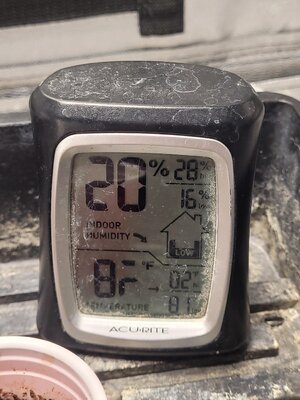
I use a container with water and a terracotta plant pot set in it with a fan to help with humidity.
I also wet my floor down.
Maybe a wet towel on the floor of your tent will help.
Doesn't have to be fancy or expensive to work.👊
 
I use a container with water and a terracotta
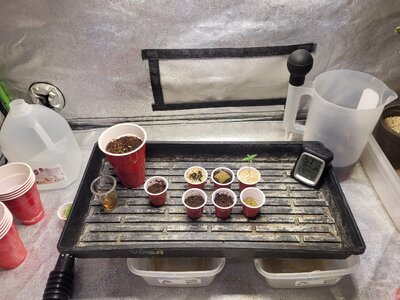
I put a gallon jug of water In there, was thinking about hanging a towel, then just kinda went along the lines of fuck it.
plant pot set in it with a fan to help with humidity.

I also wet my floor down.
Oh yeah, u got concrete floor in ur grow room?
Easy way to get some evaporative humidity.
Maybe a wet towel on the floor of your tent will help.
Doesn't have to be fancy or expensive to work.👊
Probably do need to do something, they do not seem very happy at all.

May try and set up the fog disk for some humidity, just need a proper dimensions container for it.
 
Last edited:
I placed wood [ luann] over foam insulation on the floor.
I just wet the wood that is only 1/4 inch.
Made me think a towel under all might work the same way.
 
There is concrete under all the other stuff.
I never have removed to check?
I really only wet the wood using a watering can, not like flooding it just getting it wet.
Tents are waterproof on the bottom [ double lined ] so I figure a towel would work the same and dry out fairly quickly avoiding damage or allowing some control for you.🤷‍♂️
 
There is concrete under all the other stuff.
I never have removed to check?
I really only wet the wood using a watering can, not like flooding it just getting it wet.
Tents are waterproof on the bottom [ double lined ] so I figure a towel would work the same and dry out fairly quickly avoiding damage or allowing some control for you.🤷‍♂️
Gotcha thanks man.
 
There is concrete under all the other stuff.

I never have removed to check?
Might wanna, just check? If u can easily

Just in case?
I really only wet the wood using a watering can, not like flooding it just getting it wet.
Tents are waterproof on the bottom [ double lined ] so I figure a towel would work the same and dry out fairly quickly avoiding damage or allowing some control for you.🤷‍♂️
 
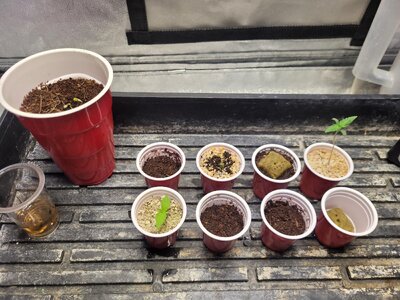
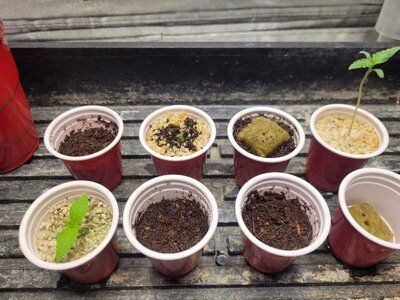
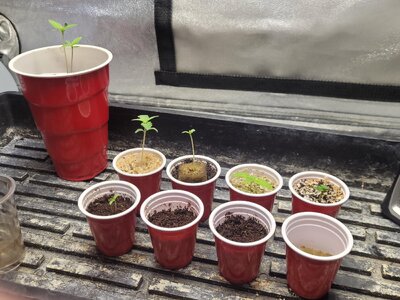
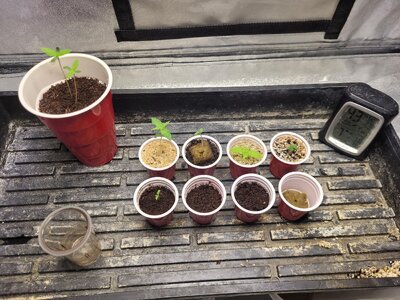
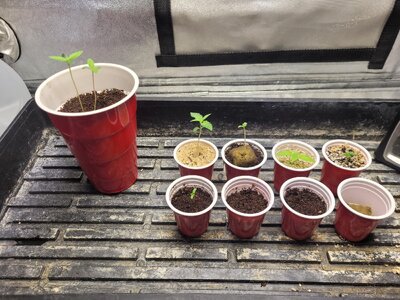
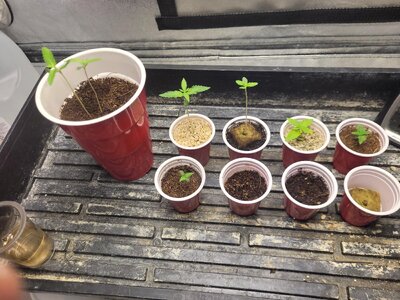
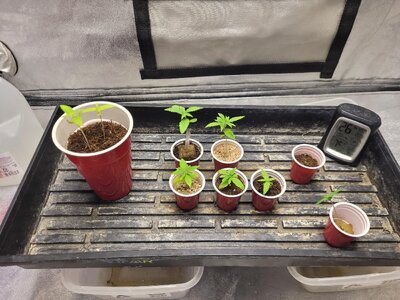
Very slow growth

Almost dry though, so a few mL of water after dinner.
 

Attachments

  • 17331902151191368386444057692169.jpg
    17331902151191368386444057692169.jpg
    766.5 KB · Views: 3
Have had so many problems

I'll only give 7-15 mL
 

Attachments

  • 17331932266246349122074102887474.jpg
    17331932266246349122074102887474.jpg
    852.4 KB · Views: 2
  • 17331932505858208060742713110115.jpg
    17331932505858208060742713110115.jpg
    477.8 KB · Views: 1
Back
Top Bottom