Bud Builders - Making Friends, Growing Cannabis

Register a free account today to become a Bud Builders member! Once signed in, you'll be able to participate on our site by adding your own topics and posts, as well as connect with other members through your own private inbox.

Join the fun and make some friends!

What is Mycorrhizae???

B2ACG

Bud Brawler
Bud Builders Approved Seed Vendor
Joined
Jun 27, 2023
Messages
121
Reaction score
552
What is Mycorrhizae???

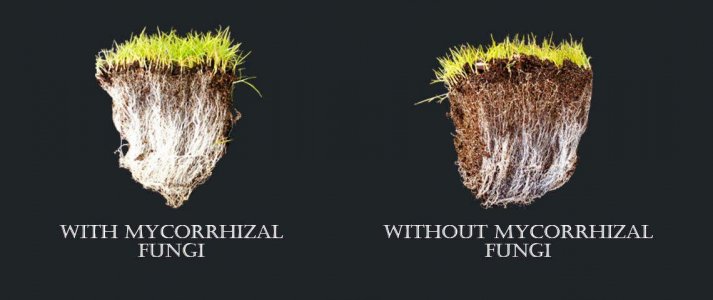
Mycorrhizae is a beneficial fungi that comes into direct contact with your roots and soil. The mycorrhizae's main function is to exchange nutrients from the soil to the plant for better uptake and water availability.. The fungi will spread far and wide to bring those foods back to the plant...
The plant plays the part of a host to the fungi. A mutual relationship, the fungi helps aid the plant with nutrient uptake.. in return, the plant produces a food in the form of carbohydrates made during photosynthesis.

For my organic growers.. Major benefits to your living soil and or composts teas..

For my synethic growers.. Be careful with large doses of phosphorus, this can slow the benefits of the fungi and its relationship to the plant...

Happy Growing
~B2ACG
mycorrhizalfungi_header.jpg
 
I've wondered how well it works with synthetics. I was using it with synthetics and felt they were probably killing the myco, switched to gaia green in hopes it'd be more friendly to them. I thought there was probably no reason to use it with synthetics but this is nice info to find out, that it isn't ALL BAD.
 
@B2ACG - Since you brought it up, I have a couple questions but no time to discuss it now. I'll be back in a few hours.

The first has to do with the reproduction of mycorrhizae: Would a small amount at the right time thrive throughout the plant's life (assuming conditions are favorable for it)?

The second involves biochar and mycorrhizae: Is biochar good or bad or what?
 
I've wondered how well it works with synthetics. I was using it with synthetics and felt they were probably killing the myco, switched to gaia green in hopes it'd be more friendly to them. I thought there was probably no reason to use it with synthetics but this is nice info to find out, that it isn't ALL BAD.
I've read mycellium/fungi can/should be able to uptake ions as well.

So I think it could aid in easier absorption

(?) No clue

I'm somewhat attempting a test to grow mycellium strictly off salts.
 
Last edited:
What do you synthetic growers use for myco's? I use Great White and am pretty sure my plants' rhizosphere's are much healthier than before using it. I think its the beneficial bacteria and food for said bacteria that is good for synthetics I think, most of the other stuff in GW doesn't do much in synthetics...right?
 
What do you synthetic growers use for myco's? I use Great White and am pretty sure my plants' rhizosphere's are much healthier than before using it. I think its the beneficial bacteria and food for said bacteria that is good for synthetics I think, most of the other stuff in GW doesn't do much in synthetics...right?
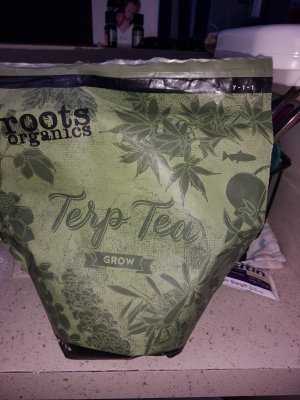
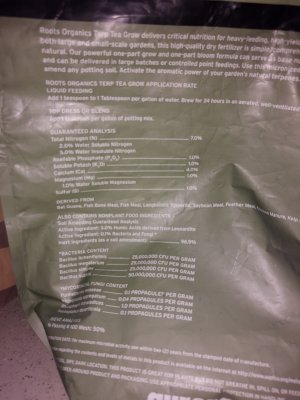
Currently, I'd mix in a slight amount of 7-1-1 terp tea that has mycos, sometimes it seems to grow but I also grow sterile and kill most my stuff off, so don't really use it anymore

I think a hybrid approach would be more beneficial to the plants health.

Synthetic nutrients with bennies.

Things like, hunic acid and fulvic acid

Think I read, humic for organics and fulvic for sterile/synthetics.

Or humic acid works better in organics
 
Currently, I'd mix in a slight amount of 7-1-1 terp tea that has mycos, sometimes it seems to grow but I also grow sterile and kill most my stuff off, so don't really use it anymore

I think a hybrid approach would be more beneficial to the plants health.

Synthetic nutrients with bennies.
So your using the terp tea and not growing sterile anymore right? Or did I misunderstand ya.
 
So your using the terp tea and not growing sterile anymore right? Or did I misunderstand ya.
Technically at that point yea, I'd attempt to get the mycos from it, it does have bennies as well.

But my solution always consist of hypo acid and 34% h2o2

The myco seems to live sometimes, but I think I kill it off eventually. Along with the bennies.
 
I heard that aged fertilizer can sometimes be a good thing? Like aged worm castings n sh!t lol
Yea , this was a good purchase.

It was when I first got into growing and started with fox farm of course lol

I usually will use it during transplants and the start of the grow and then that's it currently for my solos
 
What do you synthetic growers use for myco's? I use Great White and am pretty sure my plants' rhizosphere's are much healthier than before using it. I think its the beneficial bacteria and food for said bacteria that is good for synthetics I think, most of the other stuff in GW doesn't do much in synthetics...right?
I use Xtreme Gardening Mycos but I'm not sure if FloraNova is killing off the colony. I emailed GH trying to get a response. I asked them if the nutes I was using are usable in an organic setting. The response I got was that soome of the ingredients they use are organic. They didn't say much other than that which, I guess, leads me to believe that they are ok for organic gardening.
 
@B2ACG - Since you brought it up, I have a couple questions but no time to discuss it now. I'll be back in a few hours.

The first has to do with the reproduction of mycorrhizae: Would a small amount at the right time thrive throughout the plant's life (assuming conditions are favorable for it)?

The second involves biochar and mycorrhizae: Is biochar good or bad or what?
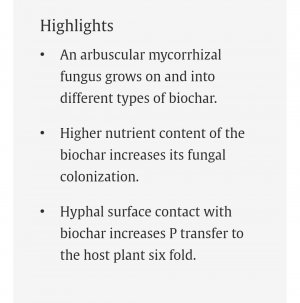
I add mycos for every transplant.. it's a beneficial fungi that will grow consider the conditions are ideal.. no need to keep adding it.. as for biochar and mycos.. they go good together.. here is a link with more information...

 
Last edited:
I've read mycellium/fungi can/should be able to uptake ions as well.

So I think it could aid in easier absorption

(?) No clue

I'm somewhat attempting a test to grow mycellium strictly off salts.
Observer, what a fitting name haha...love the studies man, send back report!

Thanks b2 for this post, well needed info
 
Observer, what a fitting name haha...love the studies man, send back report!

Thanks b2 for this post, well needed info
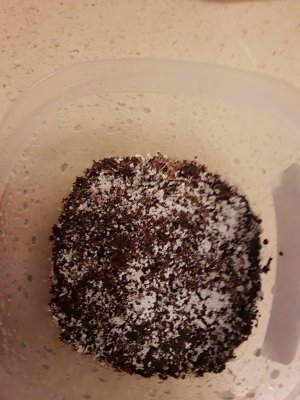
Synthetic shrooms attempt #2

Instead of dissolving them this time I spread them out on the surface.

Used more salts and added sugar.

Piss poorly "pasteurized" the coco.

Lmao

Sprayed with half gallon tap with 1ml of 34% h2o2
 

Attachments

  • 16881811039057561627302187616672.jpg
    16881811039057561627302187616672.jpg
    1.7 MB · Views: 4
I add mycos for every transplant.. it's a beneficial fungi that will grow consider the conditions are ideal.. no need to keep adding it.. as for biochar and mycos.. they go good together.. here is a link with more information...

Thanks. I have Xtreme Gardening Mykos ready for my future transplants. I also have some Great White in stock. My main interest has to do with how much to use and when to use it. It seems to me that, if amended early and the conditions are favorable, then it wouldn't need to be amended again. It seems you agree.

I read the abstract of the paper about biochar you cited. My concern is about the P transfer and how that would affect use of products like Gaia Green that contains P. I've also read that biochar increases pH, so I'm wondering about that, too. Otherwise, it seems it might be a useful amendment for organic soil growers.
 
Thanks. I have Xtreme Gardening Mykos ready for my future transplants. I also have some Great White in stock. My main interest has to do with how much to use and when to use it. It seems to me that, if amended early and the conditions are favorable, then it wouldn't need to be amended again. It seems you agree.

I read the abstract of the paper about biochar you cited. My concern is about the P transfer and how that would affect use of products like Gaia Green that contains P. I've also read that biochar increases pH, so I'm wondering about that, too. Otherwise, it seems it might be a useful amendment for organic soil growers.
You wanna sprinkle the mycos directly on the rootball during a transplant.. that's where there relationship starts.. Alot of soil brands add mycorrhizae into the mix.. but having direct contact with the roots is what you want to do.. I use a cap full for each transplant
 
You wanna sprinkle the mycos directly on the rootball during a transplant.. that's where there relationship starts.. Alot of soil brands add mycorrhizae into the mix.. but having direct contact with the roots is what you want to do.. I use a cap full for each transplant
When I up pot I spread it on the bottom of the hole and around the sides so that it makes contact with the root ball.
 
Same way I use it. I sprinkle it in my planting hole and I sprinkle the root ball with it. In a side by side, there were some profound differences.
They actually grow straw like appendages on your roots and spend the entirety of their lives feeding the plant.
I don’t nor have I ever watered it in or even add any beyond at time of planting. Isn’t needed and it’s expensive.
 
I will be using it in the future. I bought some and forgot to use it the last two times I transplanted. I won't forget it next time. I have a clone in a 1-gallon pot that will get it when it's up-potted. I'm looking forward to it.
 
Same way I use it. I sprinkle it in my planting hole and I sprinkle the root ball with it. In a side by side, there were some profound differences.
They actually grow straw like appendages on your roots and spend the entirety of their lives feeding the plant.
I don’t nor have I ever watered it in or even add any beyond at time of planting. Isn’t needed and it’s expensive.
I've seen some just spread it on the top and let it grow down? Not sure how beneficial that is in comparison to how we do it but always wondered if it is as effective or even worth doing.
 
Just some info you all may want.

Reading through the article I've already learned that high P will NOT kill Myco but will slow down the colonization process. Does this mean that they are going more dormant and can be revived once conditions improve? Reading on.....
 
I've seen some just spread it on the top and let it grow down? Not sure how beneficial that is in comparison to how we do it but always wondered if it is as effective or even worth doing.
Since this fungi feeds the roots, I just go straight to the roots with it. Why delay or interfere with the process? I dust the holes where I drop seeds even.
This will put some folks drawers in a twist, but a lot of these companies selling chemicals or additives are in the business to do just that. Pool companies for example, they are not in the business of pools per say, they sell chemicals. If I can get you to use half a container by topping or watering with it, we’ll then it benefits me to do so.
This is my opinion.
 
Since this fungi feeds the roots, I just go straight to the roots with it. Why delay or interfere with the process? I dust the holes where I drop seeds even.
This will put some folks drawers in a twist, but a lot of these companies selling chemicals or additives are in the business to do just that. Pool companies for example, they are not in the business of pools per say, they sell chemicals. If I can get you to use half a container by topping or watering with it, we’ll then it benefits me to do so.
This is my opinion.
Its kinda facts because most need the metabolites produced by a plant to germinate.

Just like some species of pan cyan mushrooms require specifically exudes from grass
 
"High levels of water-soluble nitrogen and phosphorus suppresses most mycorrhizal activity because it reduces the mutual needs of the host and the fungus. Plants that experience stress during production often develop a stronger relationship with their associated mycorrhizae. Controlled release and organic forms of fertilizers release their nutrients very slowly and do not increase the water-soluble nutrients in the substrate excessively. If you are accustomed to using an injector for constant feed programs, then use a fertilizer that is low in phosphorus and has a high percentage of nitrate-nitrogen. Consider reducing the 200-300 ppm N to 100-150 ppm N for a comparison. If you must apply a high phosphorus analysis fertilizer, we recommend applying it three or more weeks after inoculation to avoid inhibiting the mycorrhizal colonization."

Does this suggest that in the first few weeks of veg low N and P ratios are best in establishing a larger network of myco? It was also mentioned that it takes around 8 weeks for full network establishment. This would lead me to believe that while application at up pot is certainly beneficial the time factor in establishment says that application at seedling or clone level is optimal.
 
"High levels of water-soluble nitrogen and phosphorus suppresses most mycorrhizal activity because it reduces the mutual needs of the host and the fungus. Plants that experience stress during production often develop a stronger relationship with their associated mycorrhizae. Controlled release and organic forms of fertilizers release their nutrients very slowly and do not increase the water-soluble nutrients in the substrate excessively. If you are accustomed to using an injector for constant feed programs, then use a fertilizer that is low in phosphorus and has a high percentage of nitrate-nitrogen. Consider reducing the 200-300 ppm N to 100-150 ppm N for a comparison. If you must apply a high phosphorus analysis fertilizer, we recommend applying it three or more weeks after inoculation to avoid inhibiting the mycorrhizal colonization."

Does this suggest that in the first few weeks of veg low N and P ratios are best in establishing a larger network of myco? It was also mentioned that it takes around 8 weeks for full network establishment. This would lead me to believe that while application at up pot is certainly beneficial the time factor in establishment says that application at seedling or clone level is optimal.
I can tell you this, on the side by side, when I up potted the difference in the root bed was phenomenal. When I up pot even in plants that I forgot to dust, there is a difference.
I don’t disagree that it may hit full blown in an eight week period, but it’s straight up beneficial from the jump.
 
I have a related thread: Using Recharge.

This would lead me to believe that while application at up pot is certainly beneficial the time factor in establishment says that application at seedling or clone level is optimal.
That's what I was thinking. It's alive and thus can propagate itself if conditions for its growth exist. The seedling mix I bought recently has mycorrhizae in it. It makes sense to me that stimulating root growth early would result in a more rapidly growing plant.
 
@Aqua Man

So, for soil, how do we find that perfect ratio of N to feed our early veg, especially if we're steering through high PPFD where the increased photons are pulling more ions through the root system, and not suppress myco colonization?

If I'm going from seedling would application start when I place the tap root in the soil? Would I just dust the small hole that I'm putting the tap root in? Does the myco colony grow as the root ball grows or is the size of the colony determined by the amount of application hence the need for re application upon up pot?

If I'm going from clone, would it be best to apply myco dust directly to the exposed roots as root contact seems to be the goal before planting into the media?

After reading this I'm starting to see that soil advertised as having myco mixed in doesn't really do much until roots are actually moving through the part of the soil containing myco and even then it'll take weeks to establish. Some is better than none obviously but I'm curious how much actual benefit happens upon up pot application. If I applied at the solo cup stage I would typically up pot a couple weeks later and veg for an additional 3 - 4 weeks. This means that full colonization doesn't happen until week 2 of flip where higher P is desired. This would mean that at the point of full colonization I would be suppressing the effectiveness of the colony at its peak.

I'm obviously missing context but from what I've read these are the questions that popped into my head.
 
@Aqua Man

So, for soil, how do we find that perfect ratio of N to feed our early veg, especially if we're steering through high PPFD where the increased photons are pulling more ions through the root system, and not suppress myco colonization?

If I'm going from seedling would application start when I place the tap root in the soil? Would I just dust the small hole that I'm putting the tap root in? Does the myco colony grow as the root ball grows or is the size of the colony determined by the amount of application hence the need for re application upon up pot?

If I'm going from clone, would it be best to apply myco dust directly to the exposed roots as root contact seems to be the goal before planting into the media?

After reading this I'm starting to see that soil advertised as having myco mixed in doesn't really do much until roots are actually moving through the part of the soil containing myco and even then it'll take weeks to establish. Some is better than none obviously but I'm curious how much actual benefit happens upon up pot application. If I applied at the solo cup stage I would typically up pot a couple weeks later and veg for an additional 3 - 4 weeks. This means that full colonization doesn't happen until week 2 of flip where higher P is desired. This would mean that at the point of full colonization I would be suppressing the effectiveness of the colony at its peak.

I'm obviously missing context but from what I've read these are the questions that popped into my head.
N is best fed at around 120-150 ppm anyhow. So its not really a concern. It would become so with large AG operations where they apply a lot in the beginning.

Application as early as possible is ideal.

Full colonization and symbiotic relationships are not just effective when reaching potential they are beneficial from the start and just become more beneficial as it goes.

They grow faster than roots ao imo its most important to use immediately. While you may not need to add more after initial application doing so at transplants likely speeds this up.

Lets not forget that conditions greatly effect the speed at which this occurs. Like I believe it was @CannaGranny said. Feed the soil not the plants when doing organics. So an environment that’s beneficial to the myco will be something to consider
 
Also with organic sourced N your very unlike to over feed N without seeing sign of N tox with cannabis plants. N sensitivity is also plants specific. Different plants require different amounts. In cannabis its not much of an issue.

Part of the reason i say if doing organic you want a bigger pot size is specifically for the availability of nutrients. With synthetic we can feed immediately available nutrients. Not the case in organics so the larger the area the more food source and the more microbes to process it into available form
 
I use a soil that comes pre inoculated. Even at that I try to never fail to use from the minute I pop that seed in soil , throughout my up potting. I go from a seed tray to a solo cup and from the solo cup to my seven gallon pots. So, three times.
I don’t rely on the fact that the soil already has it. Question is, how much? It could contain a teaspoon and be legally advertised as containing it.
It shows me quick effects on both seeds and clones. This tells me eight weeks is not needed for effects to show.
You were right in assuming that medium plays a huge roll, though.
 
So now I'm thinking that early veg would best be served with a myco application at seedling or clone and dust the up pot hole on each transplant using only nutrition in the soil meaning no nutes for the first 2 - 3 weeks to keep N at a beneficial level for both myco and plant. After week 3 I could start salt ferts, GH said that my ferts have organics in them so I'm assuming that means that they won't hurt microbial colonies, at 25% the first few feedings so as not to upset the N ratio that would affect myco performance and ladder up the solution strength to around 60% before flip keeping an eye on what the leaves are telling me as far as how much N they want. The takeaway for me is less is more in terms of nutrient.

120 - 150 ppm? Is this for hydro or soil? I know that hydro needs less PPM than soil. I usually start at around 600ppm in early veg with amendments(silicate/hormex/calmag) outside of base being around 300 of the 600 ppm.

I use immediately available plant food but I want to have the organic breakdown occuring to backup whatever mistakes I may make on the feed side.
 
So now I'm thinking that early veg would best be served with a myco application at seedling or clone and dust the up pot hole on each transplant using only nutrition in the soil meaning no nutes for the first 2 - 3 weeks to keep N at a beneficial level for both myco and plant. After week 3 I could start salt ferts, GH said that my ferts have organics in them so I'm assuming that means that they won't hurt microbial colonies, at 25% the first few feedings so as not to upset the N ratio that would affect myco performance and ladder up the solution strength to around 60% before flip keeping an eye on what the leaves are telling me as far as how much N they want. The takeaway for me is less is more in terms of nutrient.

120 - 150 ppm? Is this for hydro or soil? I know that hydro needs less PPM than soil. I usually start at around 600ppm in early veg with amendments(silicate/hormex/calmag) outside of base being around 300 of the 600 ppm.

I use immediately available plant food but I want to have the organic breakdown occuring to backup whatever mistakes I may make on the feed side.
They require the same amount of nutrients the difference is much or the soil pom has other things in it like tannins etc. than contribute to the ppm.

Remember ppm is a measurement of the total dissolved solids… not just nutrients…. And is only the measurement of particles dissolved in water. It doesn’t mean anything in terms of how much of what that makeup is.

For this reason soil N maybe around 150ppm of nitrogen ut the total ppm maybe 3000.

In hydroponic solutions it’s generally only nutrients are added and at 600ppm you may have the same 150ppm of nitrogen.

Now for that reason a ppm meter is NOT a good way to measure nutrient content from a slurry or runoff test in soil. And should only be used to look at trends.

Dont make the mistake of talking about ppms in terms of nutrients in soil its just not reliable.
 
Also plants only take up nutrients that are dissolved in water. If you want to know the concentrations and makeup of soil then a soil analysis should be done. But also you need to consider the available and bound concentrations that require broken down to be available … there is a lot more to this.
 
Back
Top Bottom