

Bud Builders - Making Friends, Growing Cannabis
You are using an out of date browser. It may not display this or other websites correctly.
You should upgrade or use an alternative browser.
You should upgrade or use an alternative browser.
Fog prep
- Thread starter moe.red
- Start date
A
Amnesia
Guest
Even more impressive! I knew it when I saw the code editor in the video. Thanks for sharing this fascinating project.


moe.red
hydro helper
- Joined
- Apr 1, 2023
- Messages
- 4,509
- Reaction score
- 25,331
Now for my next trick…
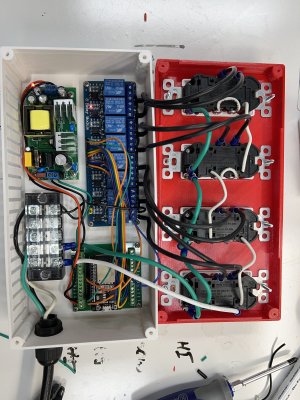
I made a thing. Wife says it looks like a Lego. It’s a bank of 8 individually addressable ac outlets controlled via Wi-Fi.
I need a total of 16 controls for this next grow so I’ll be making 1 more to go with it. Then fog is ready to start back up.
View attachment IMG_2698.mov
View attachment IMG_2700.mov
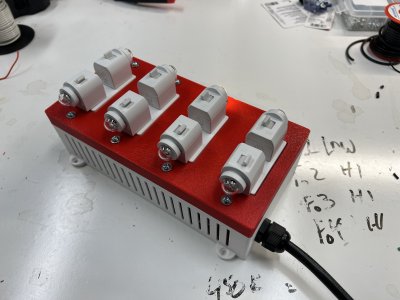
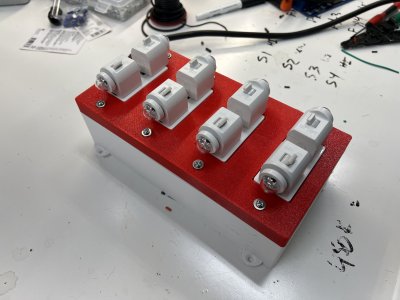
I made a thing. Wife says it looks like a Lego. It’s a bank of 8 individually addressable ac outlets controlled via Wi-Fi.
I need a total of 16 controls for this next grow so I’ll be making 1 more to go with it. Then fog is ready to start back up.
View attachment IMG_2698.mov
View attachment IMG_2700.mov


Seb
Ganja Guerrilla
- Joined
- Jul 4, 2023
- Messages
- 54
- Reaction score
- 184
Nice build and so clean!
Is that a buck converter on the top left? Great idea.
I have built the ghetto version using an ESP01 and four relays on a single board. You can get these integrated boards really cheap. But it's only a four channel. And mine was shoved into an ikea plastic container
I assume your case was not printed on an ender?
Found an 8 channel with integrated ESP8266 - damn:

Is that a buck converter on the top left? Great idea.
I have built the ghetto version using an ESP01 and four relays on a single board. You can get these integrated boards really cheap. But it's only a four channel. And mine was shoved into an ikea plastic container
I assume your case was not printed on an ender?
Found an 8 channel with integrated ESP8266 - damn:
Last edited:
moe.red
hydro helper
- Joined
- Apr 1, 2023
- Messages
- 4,509
- Reaction score
- 25,331
Printed on Prusa.Nice build and so clean!
Is that a buck converter on the top left? Great idea.
I have built the ghetto version using an ESP01 and four relays on a single board. You can get these integrated boards really cheap. But it's only a four channel. And mine was shoved into an ikea plastic container
I assume your case was not printed on an ender?
Found an 8 channel with integrated ESP8266 - damn:
View attachment 17563
This is an ESP32. Basically I’m using parts I had laying around. If I was to do this for real I would do everything on a single board. I still may the applications for something like this are pretty wide and this does not exist today.
And yeah buck but too big for the job. Same with the block there it’s just what I had for parts.
moe.red
hydro helper
- Joined
- Apr 1, 2023
- Messages
- 4,509
- Reaction score
- 25,331
It is a group of 8 ac outlets that can be turned on and off via program or command via Wi-Fi.I have no idea WTF that is, but it look!
This allows me to turn things on and off like fog, O2, pump etc on whatever timing I find most efficient.
Take CO2 for example. With the raspberry pi I measure atmospheric carbon dioxide. If I want more I can send a signal to the outlet that the tank is connected to to add CO2 as needed. In this way I have control over all parameters
Seb
Ganja Guerrilla
- Joined
- Jul 4, 2023
- Messages
- 54
- Reaction score
- 184
Which software are you running? Homeassistant? That is what I use, in combination with Node Red when convenient.It is a group of 8 ac outlets that can be turned on and off via program or command via Wi-Fi.
This allows me to turn things on and off like fog, O2, pump etc on whatever timing I find most efficient.
Take CO2 for example. With the raspberry pi I measure atmospheric carbon dioxide. If I want more I can send a signal to the outlet that the tank is connected to to add CO2 as needed. In this way I have control over all parameters
Do you have experience with PCB design? To me that seems like the final boss of nerd-dom that I have not conquered
My intuition might be way off because I have an ender so the print bed should be sufficient to print a proper case for my contraption...
moe.red
hydro helper
- Joined
- Apr 1, 2023
- Messages
- 4,509
- Reaction score
- 25,331
All the software I am running is custom. Both me and my kid are programmers, so we just did our own thing. Basement is playtime for us.Which software are you running? Homeassistant? That is what I use, in combination with Node Red when convenient.
Do you have experience with PCB design? To me that seems like the final boss of nerd-dom that I have not conquered
My intuition might be way off because I have an ender so the print bed should be sufficient to print a proper case for my contraption...
Yes, I make circuit boards. My first degree was in Electrical Engineering. I use Eagle CAD and Osh Park for short run stuff. I use Fusion 360 for all the design CAD/CAM stuff, Eagle I have been running for decades, now it is all owned by the same company. Makes it really easy.
OSH Park ~
Ender works great for these kinds of projects, print on bro.

Rootsruler
Know it all
- Joined
- Apr 14, 2023
- Messages
- 3,267
- Reaction score
- 14,635
I used to make custom circuit boards using a laser printer, copper board, a steam iron and Muriatic AcidAll the software I am running is custom. Both me and my kid are programmers, so we just did our own thing. Basement is playtime for us.
Yes, I make circuit boards. My first degree was in Electrical Engineering. I use Eagle CAD and Osh Park for short run stuff. I use Fusion 360 for all the design CAD/CAM stuff, Eagle I have been running for decades, now it is all owned by the same company. Makes it really easy.
OSH Park ~
oshpark.com
Ender works great for these kinds of projects, print on bro.
I'm seriously thinking of getting back into RDWC now that I have the best at my disposal. I hope you don't mind me asking a million questions.

- Joined
- Apr 16, 2023
- Messages
- 4,407
- Reaction score
- 20,032
He got me off to a great start! I'm so glad I went this route. Get your buffering figured out and the rest just seems to happen on it's own. My top-off method is a bit different but everything else has been Moe-approved. With your experience, I'm sure you'll be asking all the right questions before you even begin. I know I like to have at least a basic understanding before diving into something.I used to make custom circuit boards using a laser printer, copper board, a steam iron and Muriatic Acid
I'm seriously thinking of getting back into RDWC now that I have the best at my disposal. I hope you don't mind me asking a million questions.
I couldn't imagine mixing nutes, watering, testing runoff and fighting dirtbugs EVERY day MULTIPLE times a day.
moe.red
hydro helper
- Joined
- Apr 1, 2023
- Messages
- 4,509
- Reaction score
- 25,331
Single sided boards are better than nothing but the real power comes with multi layer stuff.I used to make custom circuit boards using a laser printer, copper board, a steam iron and Muriatic Acid
I'm seriously thinking of getting back into RDWC now that I have the best at my disposal. I hope you don't mind me asking a million questions.
Now is a great time to start building and RDWC with winter not far off.


Observer
Quantum Yield Engineer
- Joined
- May 11, 2023
- Messages
- 8,627
- Reaction score
- 20,674
- Light intensity: The amount of light that is available to the plant.
- Light quality: The wavelength of light that is available to the plant.
- Photosynthetic photon flux density (PPFD): The measure of the amount of light energy that is available to plants for photosynthesis.
- Temperature: The measure of how hot or cold something is.
- Relative humidity (RH): The amount of water vapor in the air relative to the amount of water vapor that the air can hold at a given temperature.
- CO2: Carbon dioxide is a gas that is essential for photosynthesis.
- Dissolved oxygen (DO): The amount of oxygen that is dissolved in a liquid.
- pH: A measure of the acidity or alkalinity of a solution.
- Nutrients: The substances that plants need to grow and thrive.
- Water: The amount of water that is available to the plant.
- Soil type: The type of soil that the plant is grown in.
- Soil pH: The pH of the soil that the plant is grown in.
- Soil moisture: The amount of water in the soil that the plant is grown in.
- Wind: The movement of air.
- Leaf surface temperature (LST): The temperature of the leaves of a plant.
- Vapor pressure deficit (VPD): The difference between the vapor pressure of water in the air and the vapor pressure of water at the leaf surface.
but the 16 that you are controlling via the SwitchBox Above, Curious.

- Joined
- Apr 24, 2023
- Messages
- 868
- Reaction score
- 4,070
I use great white in my DTW with GH, what kind of fulvic product do you recommend? Have been using Diamond nectar thinking it was humic and it was helpful in hydro. Both things I guess are wrong...no humic in diamond nectar and its fulvic not humic I want lol. Good to know this!!DFG
First off funny that is the water police here in Cali, or was. department of Fish and Game. Humic is not needed in Hydro. Molasses is to feed the microbes in the system and will create a spike in population what will die off once the molasses has been consumed by the microbes. Best to just use a folvic product with hydro.
*looked up Diamond nectar and even though the label doesn't list humic acids, I found some ad copy for Diamond nectar saying "Diamond Nectar is extracted from naturally mined Leonardite with a high profile of low molecular weight Humic acids."
Observer
Quantum Yield Engineer
- Joined
- May 11, 2023
- Messages
- 8,627
- Reaction score
- 20,674
Oo found another variable.
Oxidation-reduction potential (ORP)
measures the ability of a lake or river to cleanse itself or break down waste products, such as contaminants and dead plants and animals.
When the ORP value is high, there is lots of oxygen present in the water.
Oxidation-reduction potential (ORP)
measures the ability of a lake or river to cleanse itself or break down waste products, such as contaminants and dead plants and animals.
When the ORP value is high, there is lots of oxygen present in the water.
Fulvic acid is available thru Mr. Fulvic and I think the cost includes shipping. I tried that and it works well but I have also used Ferti Organics which is more cost effective. Ferti is dry powder and the stuff is hard to mix. If you had one of those bottles from the health food store with the metal cage in the bottle it would probably work better. Bill Farthing who is on several forums stated the liquid products are better because the drying process removed amino acids.I use great white in my DTW with GH, what kind of fulvic product do you recommend? Have been using Diamond nectar thinking it was humic and it was helpful in hydro. Both things I guess are wrong...no humic in diamond nectar and its fulvic not humic I want lol. Good to know this!!
*looked up Diamond nectar and even though the label doesn't list humic acids, I found some ad copy for Diamond nectar saying "Diamond Nectar is extracted from naturally mined Leonardite with a high profile of low molecular weight Humic acids."
I try to avoid the hydroponic store tax for nutrients as much as possible, it is not as easy as buying the premixed bottles. There are things in those bottle that are not required to be on the label. All the manufacturer has to state is the NPK minimum value and that is it.
- Joined
- Apr 16, 2023
- Messages
- 4,407
- Reaction score
- 20,032
Be aware that they sell the same Fulvic under both names; Mr. Fulvic and Mr. Humic. Something about labeling requirements in different states. I ordered Mr. Fulvic and received a bottle of Mr. Humic. I was pretty bummed until moe reassured me that it's the same stuff.Fulvic acid is available thru Mr. Fulvic and I think the cost includes shipping.
Good call. Yes some states do not allow fulvic to be sold.Be aware that they sell the same Fulvic under both names; Mr. Fulvic and Mr. Humic. Something about labeling requirements in different states. I ordered Mr. Fulvic and received a bottle of Mr. Humic. I was pretty bummed until moe reassured me that it's the same stuff.
moe.red
hydro helper
- Joined
- Apr 1, 2023
- Messages
- 4,509
- Reaction score
- 25,331
Yes, that is 16 important things, but it takes more than switches to control them.heres 16 controllable Variables
- Light intensity: The amount of light that is available to the plant.
- Light quality: The wavelength of light that is available to the plant.
- Photosynthetic photon flux density (PPFD): The measure of the amount of light energy that is available to plants for photosynthesis.
- Temperature: The measure of how hot or cold something is.
- Relative humidity (RH): The amount of water vapor in the air relative to the amount of water vapor that the air can hold at a given temperature.
- CO2: Carbon dioxide is a gas that is essential for photosynthesis.
- Dissolved oxygen (DO): The amount of oxygen that is dissolved in a liquid.
- pH: A measure of the acidity or alkalinity of a solution.
- Nutrients: The substances that plants need to grow and thrive.
- Water: The amount of water that is available to the plant.
- Soil type: The type of soil that the plant is grown in.
- Soil pH: The pH of the soil that the plant is grown in.
- Soil moisture: The amount of water in the soil that the plant is grown in.
- Wind: The movement of air.
- Leaf surface temperature (LST): The temperature of the leaves of a plant.
- Vapor pressure deficit (VPD): The difference between the vapor pressure of water in the air and the vapor pressure of water at the leaf surface.
but the 16 that you are controlling via the SwitchBox Above, Curious.
For this box, I'm controlling things like fog on, pump on, O2 flow, empty pump on 4 fog sites. 4 outputs on 4 sites = 16.
I'll explain better with pictures in the near future.
moe.red
hydro helper
- Joined
- Apr 1, 2023
- Messages
- 4,509
- Reaction score
- 25,331
You asking for a new title? Observer of Quantum Yield!
Observer
Quantum Yield Engineer
- Joined
- May 11, 2023
- Messages
- 8,627
- Reaction score
- 20,674
Haha, actually sounds kinda cool.You asking for a new title? Observer of Quantum Yield!
I was just curious if you or anyone else has heard that term, I just heard about it the other night from bugbee, I made a bugbee thread and posted videos.
- Joined
- Apr 16, 2023
- Messages
- 4,407
- Reaction score
- 20,032
So that's where he's been.Looks like I have some reading to do. I need more hours in the day. Just talked with Aqua over text, he is working 7 days now too, life just gets in the way of the fun stuff sometimes.
We will eventually get caught up!
Observer
Quantum Yield Engineer
- Joined
- May 11, 2023
- Messages
- 8,627
- Reaction score
- 20,674
Of course, I was just pointing out possible controllable/monitorable variablesYes, that is 16 important things, but it takes more than switches to control them.
For this box, I'm controlling things like fog on, pump on, O2 flow, empty pump on 4 fog sites. 4 outputs on 4 sites = 16.
I'll explain better with pictures in the near future.
Makes sense, I didn't think about controls for multiple sites, ie same few variables to on/off.
Appreciate you're work Moe.
moe.red
hydro helper
- Joined
- Apr 1, 2023
- Messages
- 4,509
- Reaction score
- 25,331
I don't think so. Try it anyway Mr Quantum.Curious if a SpO2 meter would pick up anything if tested on plant?
Any idea
Lol?
moe.red
hydro helper
- Joined
- Apr 1, 2023
- Messages
- 4,509
- Reaction score
- 25,331
I use House of Hydro .comSource for ultrasonic fogger?
If I may kindly
They are cheaper on amazon, but the HoH stuff has been going strong for years, the Amazon crap I bought burned up pretty quick.
Observer
Quantum Yield Engineer
- Joined
- May 11, 2023
- Messages
- 8,627
- Reaction score
- 20,674
""This is because water is polar since it has partially positive hydrogen atoms which can interact with anions and partially negative oxygen atoms which can interact with cations.""
What/how would this play along with plant interaction?
What/how would this play along with plant interaction?
Observer
Quantum Yield Engineer
- Joined
- May 11, 2023
- Messages
- 8,627
- Reaction score
- 20,674

Improvement in growth of plants under the effect of magnetized water
<abstract> <p>The magnetic field can change the polarity characteristics and hydrogen-bond structure of water; therefore, magnetized water can affect plant growth and development. Magnetized water is hexagonal water created by passing water through a specific magnet that can activate and ionize...
Observer
Quantum Yield Engineer
- Joined
- May 11, 2023
- Messages
- 8,627
- Reaction score
- 20,674

Investigation of changes in properties of water under the action of a magnetic field - Science China Physics, Mechanics & Astronomy
The properties of water and their changes under the action of a magnetic field were gathered by the spectrum techniques of infrared, Raman, visible, ultraviolet and X-ray lights, which may give an insight into molecular and atomic structures of water. It was found that some properties of water...
This topic, probably get its own thread.
Observer
Quantum Yield Engineer
- Joined
- May 11, 2023
- Messages
- 8,627
- Reaction score
- 20,674
Ah, but you're way over mind on alotDude you are over my head.
Observer
Quantum Yield Engineer
- Joined
- May 11, 2023
- Messages
- 8,627
- Reaction score
- 20,674
@Franksta""This is because water is polar since it has partially positive hydrogen atoms which can interact with anions and partially negative oxygen atoms which can interact with cations.""
What/how would this play along with plant interaction?
Btw how is franksta anyone heard from him
Similar threads


- Replies
- 14
- Views
- 2K

- Replies
- 21
- Views
- 4K


- Replies
- 149
- Views
- 27K

