


- Joined
- Apr 15, 2023
- Messages
- 9,397
- Reaction score
- 47,915
My bad i forgot you were on the road all day today.I just got home from 17 hours on the road. I'll try to get to this here in a bit but if not, first thing in the morning. @tobh
My bad i forgot you were on the road all day today.I just got home from 17 hours on the road. I'll try to get to this here in a bit but if not, first thing in the morning. @tobh

The baby got a second wind when I got home (warms my heart) and I finally got her put to bed. I hope I can put this in a way that's easily understood.1. Do you only need on, ideally at the beginning of a circuit where there are multiple loads?
2. Would having every outlet be a GFCI be excessive?
3. How much benefit is to be gained by having GFCI vs tamper resistant duplex outlets?
4. Are grounds really necessary for GFCIs to work as intended (eg, shock a mofo but don't kill em).


great win with the baby!The baby got a second wind when I got home (warms my heart) and I finally got her put to bed. I hope I can put this in a way that's easily understood.
1. Technically yes. You only need one. Land your incoming feed on the line side and the outgoing feed on the load side. However, factoring in the resistance of the wire, I would suggest no more than six receptacles downstream on 12 gauge wire, less on 14 (14 gauge shouldn't be used for branch circuits but some electricians are cheapskates). Any more than that and you'll run into nuisance tripping, or tripping caused by a load that wouldn't normally trip a GFCI.
2. Again, technically, yes. However, should you be running multiple loads on the same circuit, any downstream "fault" will kill ALL receptacles protected by the GFCI. I, personally, would use a GFCI in all locations. This isn't just an upsell from your electrician. Nuisance tripping is just that... A nuisance.
3. This is comparing apples to oranges. While both delicious, they don't have the same uses. Tamper proof recepts can come in all sorts of flavors. They simply make it impossible to plug something like a paperclip into the hot side of the recept without also inserting another paperclip into the neutral side. It just makes it much more difficult for your kid to fart around and get shocked. It also makes it sort of a pain to plug things in and more difficult to insert probes from a multimeter. I hate them.
4. A grounding conductor is NOT necessary for a GFCI to function. They measure the difference between the hot and neutral conductors and trip when it senses an imbalance of at least 5 milliamps between the two. They function properly on 2 wire systems.
Note: GFCIs should be avoided for large unbalanced loads such as motors or fluorescent lights. This is debatable, but something like a large compressor on a fridge, water chiller or air conditioner will often trip the GFCI when the compressor kicks on. There's a large inrush of current which the GFCI will usually interpret as a fault. With fluorescent lighting, it has to do with the capacitors in the ballast storing energy. This brings us back to nuisance tripping.
I'm sleepy
Night ya'll
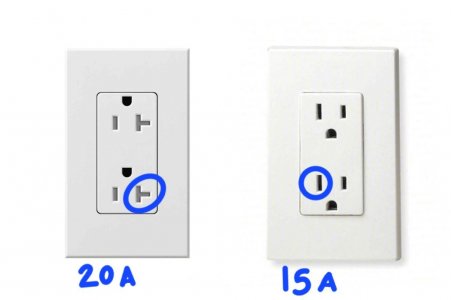
14 gauge is fine if you dedicate the GFCIs and land it on a 15 amp breaker and 15 amp receptacle. That would be totally fine, especially for a small grow room where you probably won't plug in a 20 amp piece of equipment. Easy way to tell the difference between a 15 and 20 amp cord is the prong that plugs into the left side of the outlet. 15 amp receptacles will have two vertical slots while the left slot on a 20 amp receptacle will have the horizontal notch. 20 amp male plugs have one vertical prong and one horizontal.great win with the baby!
also, this is perfect. great detail and simple explanation. everything you said aligns with the research I've been doing, and now we have it documented here for future builders wondering if they should get that $1.50 duplex outlet with 12/2 wire or go for the $3 GFCI duplex with 14/3 wire.
TL;DR: build a room, eat the cost for GFCI outlets, use good (expensive) wire, and don't get hemmed up by burning your apartment complex down.

Who ever wired my garage ran the fluorescent lights off the garage gfci. Im going to replace the fixtures w led pancakes. They trip the gfci randomly in the winter which is super handy since the overhead door motors are on the same circuit.The baby got a second wind when I got home (warms my heart) and I finally got her put to bed. I hope I can put this in a way that's easily understood.
1. Technically yes. You only need one. Land your incoming feed on the line side and the outgoing feed on the load side. However, factoring in the resistance of the wire, I would suggest no more than six receptacles downstream on 12 gauge wire, less on 14 (14 gauge shouldn't be used for branch circuits but some electricians are cheapskates). Any more than that and you'll run into nuisance tripping, or tripping caused by a load that wouldn't normally trip a GFCI.
2. Again, technically, yes. However, should you be running multiple loads on the same circuit, any downstream "fault" will kill ALL receptacles protected by the GFCI. I, personally, would use a GFCI in all locations. This isn't just an upsell from your electrician. Nuisance tripping is just that... A nuisance.
3. This is comparing apples to oranges. While both delicious, they don't have the same uses. Tamper proof recepts can come in all sorts of flavors. They simply make it impossible to plug something like a paperclip into the hot side of the recept without also inserting another paperclip into the neutral side. It just makes it much more difficult for your kid to fart around and get shocked. It also makes it sort of a pain to plug things in and more difficult to insert probes from a multimeter. I hate them.
4. A grounding conductor is NOT necessary for a GFCI to function. They measure the difference between the hot and neutral conductors and trip when it senses an imbalance of at least 5 milliamps between the two. They function properly on 2 wire systems.
Note: GFCIs should be avoided for large unbalanced loads such as motors or fluorescent lights. This is debatable, but something like a large compressor on a fridge, water chiller or air conditioner will often trip the GFCI when the compressor kicks on. There's a large inrush of current which the GFCI will usually interpret as a fault. With fluorescent lighting, it has to do with the capacitors in the ballast storing energy. This brings us back to nuisance tripping.
I'm sleepy
Night ya'll

That’s fine as long as you do it right. Not adding anything just extending.is it kosher to splice wire into an existing line to extend the run?
for context, I want to move a light switch from a really dumb spot to a spot that makes sense closer to a door on another wall. I can safely assume that the line and load wires aren't going to reach the new location.
Up here all bathroom and kitchen counter plugs are GFIs.Might do the latter given what I'm dealing with here. Plan on putting in a GFCI here anyways since this outlet sits right next to a sink.
View attachment 18665
Oh yeah that's lame. Is the GFCI in the ceiling too? Added lamenessWho ever wired my garage ran the fluorescent lights off the garage gfci. Im going to replace the fixtures w led pancakes. They trip the gfci randomly in the winter which is super handy since the overhead door motors are on the same circuit.


There used to be a simplified version you could get that mainly covered 200 amp services and under. Good for the home owner and worded to understand.Not an easy book to interpret
You gotta watch using the larger #12 on 15amp receptacles....Thet don't fit the quick wire and they're too big to wrap around the screw properly, They are stiffer wires and there's less room in your junction boxes when you splice them. I never wired homes with #12 unless there was a specific need for 20 amp circuits....heating/ air conditioning, garage welders ect......I've been away some 20+ years now things may have changed.....I'm up North too we got some different rules on stuffgreat win with the baby!
also, this is perfect. great detail and simple explanation. everything you said aligns with the research I've been doing, and now we have it documented here for future builders wondering if they should get that $1.50 duplex outlet with 12/2 wire or go for the $3 GFCI duplex with 14/3 wire.
TL;DR: build a room, eat the cost for GFCI outlets, use good (expensive) wire, and don't get hemmed up by burning your apartment complex down.
#12 fits…tight. I used it as I got deals at work. Bitch to remove sometimes. Don’t use the screws but can see that being a problem.You gotta watch using the larger #12 on 15amp receptacles....Thet don't fit the quick wire and they're too big to wrap around the screw properly, They are stiffer wires and there's less room in your junction boxes when you splice them. I never wired homes with #12 unless there was a specific need for 20 amp circuits....heating/ air conditioning, garage welders ect......I've been away some 20+ years now things may have changed.....I'm up North too we got some different rules on stuff
Cheaper and cheaper materials......Are you saying you're breaking the switch while using a #12 that you've quick wired??.......If that's the case I see the #12 as the problem....soon as you put some stress on the switch pushing it into the box the cheap bakelite snaps? Not much of a body on the new switches anyways....fk they used to be $3 when I was wiring 30 years ago and they're $2 at the dollar store now#12 fits…tight. I used it as I got deals at work. Bitch to remove sometimes. Don’t use the screws but can see that being a problem.
Got to post a pic of an issue I’m having with breaking light switches.
Yeah you guys run a higher voltage, correct? Higher voltage equates to less amperage. For some reason I'm thinking 347v or something weird like that. That could be Australia. We're almost strictly 120/240v single phase services for residential.You gotta watch using the larger #12 on 15amp receptacles....Thet don't fit the quick wire and they're too big to wrap around the screw properly, They are stiffer wires and there's less room in your junction boxes when you splice them. I never wired homes with #12 unless there was a specific need for 20 amp circuits....heating/ air conditioning, garage welders ect......I've been away some 20+ years now things may have changed.....I'm up North too we got some different rules on stuff
Here we have the NEC Handbook. Same book but it also includes illustrations and a simplified explanation. It's an awesome book for sure, but it's not allowed for license tests.There used to be a simplified version you could get that mainly covered 200 amp services and under. Good for the home owner and worded to understand.
No we're same as you 110/ 220 v Europe is 220 v.....we use Lumex though..... no Romex up here.....and you guys and fking Philips screws.......lol...Robertson for the win.....Yeah you guys run a higher voltage, correct? Higher voltage equates to less amperage.
Here we have the NEC Handbook. Same book but it also includes illustrations and a simplified explanation. It's an awesome book for sure, but it's not allowed for license tests.
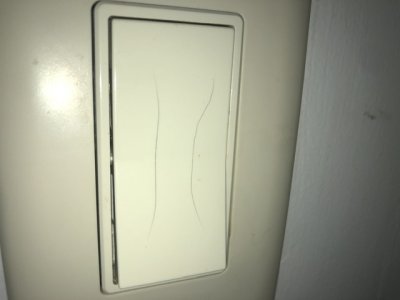
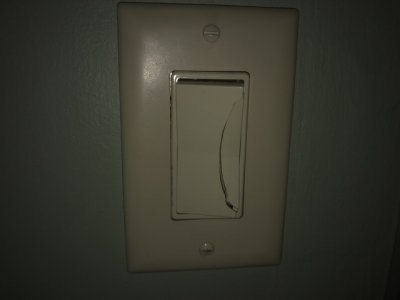
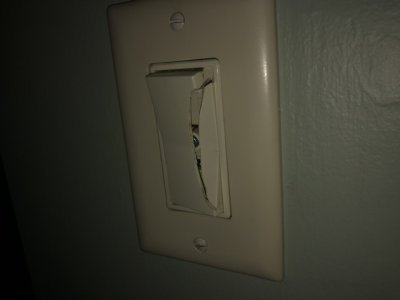
Our newer screws are combination flat/phillips/square. It's real dump though. The side screws use a #2 square and the support screws are #1. Super dumbNo we're same as you 110/ 220 v Europe is 220 v.....we use Lumex though..... no Romex up here.....and you guys and fking Philips screws.......lol...Robertson for the win.....
I'm a fan of Leviton or Pass&Seymore.View attachment 19053View attachment 19054View attachment 19055
High traffic areas do seem to break faster but not always. Might be people pushing? But I think time and shit plastic. Bought three boxes from big box about 10+ years ago for Reno. Have some left over but they all seem to break. Rooms sunlight or temperatures don’t seem to matter.
Now I don’t know who’s brand to buy as most are just from same factory, like light bulbs used to be.
Romex is just the armoured cable isn’t it? I used it here about 15+ years ago. It gone now or I’m mistaken?No we're same as you 110/ 220 v Europe is 220 v.....we use Lumex though..... no Romex up here.....and you guys and fking Philips screws.......lol...Robertson for the win.....
Armored cable used to be BX and lately it's MC or metal cladRomex is just the armoured cable isn’t it? I used it here about 15+ years ago. It gone now or I’m mistaken?
These might be Leviton. If so need to get wife to email from work. They will step up…or at least used to. If on sale crap then ya, name brand time.I'm a fan of Leviton or Pass&Seymore.
Do you live with Macho Man Randy Savage?
Romex is just the armoured cable isn’t it? I used it here about 15+ years ago. It gone now or I’m mistaken?
Ya bx is what we called it. with the red plastic inserts.Armored cable used to be BX and lately it's MC or metal clad
just like the super useful switch in the garage at my old place. you turn off the switch to shut off the garage lights, and you also turn off the garage opener which would quickly forget its settings. i ended up taping that switch to the on position after having to reconfigure the garage door a half dozen times.Who ever wired my garage ran the fluorescent lights off the garage gfci. Im going to replace the fixtures w led pancakes. They trip the gfci randomly in the winter which is super handy since the overhead door motors are on the same circuit.
yeah, that's my concern with #12. shit is heavy, and all the circuit breakers here are 15 amp minus the one that runs the subpanel for all the appliances. no sense is having a conductor that can support significantly more amperage than the circuit breaker can handle.You gotta watch using the larger #12 on 15amp receptacles....Thet don't fit the quick wire and they're too big to wrap around the screw properly, They are stiffer wires and there's less room in your junction boxes when you splice them. I never wired homes with #12 unless there was a specific need for 20 amp circuits....heating/ air conditioning, garage welders ect......I've been away some 20+ years now things may have changed.....I'm up North too we got some different rules on stuff
wtf lol i've punched switches and broken the boxes loose in the wall, never have i seen a switch break like that.View attachment 19053View attachment 19054View attachment 19055
High traffic areas do seem to break faster but not always. Might be people pushing? But I think time and shit plastic. Bought three boxes from big box about 10+ years ago for Reno. Have some left over but they all seem to break. Rooms sunlight or temperatures don’t seem to matter.
Now I don’t know who’s brand to buy as most are just from same factory, like light bulbs used to be.
It just Identifies it as a 20 amp and 20 amp male plugs have that L on a pin...15 amp is different than a 20 and is different than a 30 and 40 amp is different than a 30just like the super useful switch in the garage at my old place. you turn off the switch to shut off the garage lights, and you also turn off the garage opener which would quickly forget its settings. i ended up taping that switch to the on position after having to reconfigure the garage door a half dozen times.
yeah, that's my concern with #12. shit is heavy, and all the circuit breakers here are 15 amp minus the one that runs the subpanel for all the appliances. no sense is having a conductor that can support significantly more amperage than the circuit breaker can handle.
So, with the 20 amp outlets, what's with the horizontal prong? are there any male plugs that actually utilize that prong?
a 20 amp male plug will have 1 vertical (the hot one, signifying 120v) and 1 horizontal (the neutral, signifying 20a). This prevents you from plugging a 20 amp poece of equipment into a device rated for only 15. Doesn't matter if you plug a 15 amp piece of equipment into a 20 amp recept so the 20 amp recepts accept both.So, with the 20 amp outlets, what's with the horizontal prong? are there any male plugs that actually utilize that prong?
347 volt is for commercial applications not home owners.Yeah you guys run a higher voltage, correct? Higher voltage equates to less amperage. For some reason I'm thinking 347v or something weird like that. That could be Australia. We're almost strictly 120/240v single phase services for residential.
Here we have the NEC Handbook. Same book but it also includes illustrations and a simplified explanation. It's an awesome book for sure, but it's not allowed for license tests.
You work with Lutron or other lighting control stuff much? I swapped out all my light switches for the Caseda devices and we really like them.I'm a fan of Leviton or Pass&Seymore.
Do you live with Macho Man Randy Savage?
Well, yeah lol current is not all the same. Good to clarify though. I can't think of any reason residential would run higher than 20 amp though? At least in the US, afaik everything residential is predominantly 200 amp service, and the power companies raise an eyebrow if someone requests higher than that.It just Identifies it as a 20 amp and 20 amp male plugs have that L on a pin...15 amp is different than a 20 and is different than a 30 and 40 amp is different than a 30
Ah ok. That's what I was wondering. Suppose I could've googled it. I've just never seen a plug that uses that horizontal portion of the plug, though I've seen em a lot in commercial buildingsa 20 amp male plug will have 1 vertical (the hot one, signifying 120v) and 1 horizontal (the neutral, signifying 20a). This prevents you from plugging a 20 amp poece of equipment into a device rated for only 15. Doesn't matter if you plug a 15 amp piece of equipment into a 20 amp recept so the 20 amp recepts accept both.
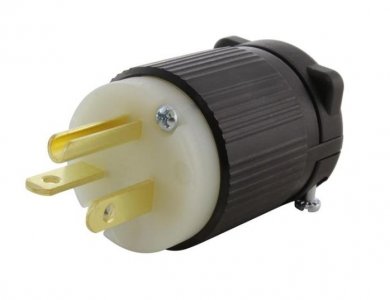
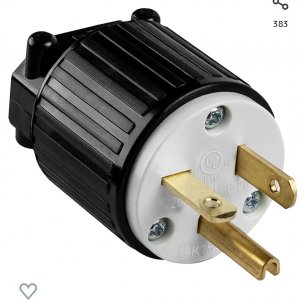
This is a 20 amp 120v cord end
View attachment 19075
This is a 15 amp 240v cord end
View attachment 19077
A 20 amp 240 volt plug will have 2 horizontal blades.
Maybe an old wall and the one you're installing the box i to is an addition? Are they loose? Just cut really easy and have a look-see.alright punched a hole for the last keystone panel (for now), and found a couple pieces of drywall just floating the cavity. I'm wondering if maybe they're there to protect an electrical line? is it common to do that? they pretty well fuckered my plans for the kind of box i'm using because i can't push the box back far enough with those damn things in there.
They were scraps that someone decided it was more convenient to bury them in a wall than to toss em. Fuckers lolMaybe an old wall and the one you're installing the box i to is an addition? Are they loose? Just cut really easy and have a look-see.
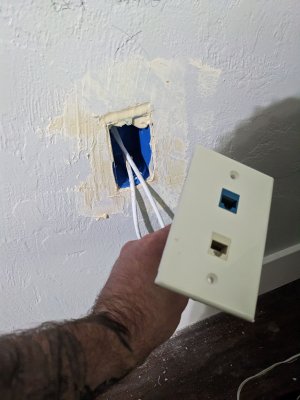
That's why I asked if they were looseThey were scraps that someone decided it was more convenient to bury them in a wall than to toss em. Fuckers lol
Yeah right away I knew they were loose, I was like WTF is this some kind of shade tree electrician shit or was someone just being a lazy asshole? Turned out to be the latter. I too am being a lazy asshole by leaving thwm in thereThat's why I asked if they were loose
Better than finding a piss bottle in thereYeah right away I knew they were loose, I was like WTF is this some kind of shade tree electrician shit or was someone just being a lazy asshole? Turned out to be the latter. I too am being a lazy asshole by leaving thwm in there
It's only a matter of timeBetter than finding a piss bottle in there
No I've never seen it as protection. We have to use metal plates over studs where our holes we pull the wire through are too close to the front of the stud in residential wiring. So the drywall screws don't go through the wire but I've no idea why it would be hanging between studsalright punched a hole for the last keystone panel (for now), and found a couple pieces of drywall just floating the cavity. I'm wondering if maybe they're there to protect an electrical line? is it common to do that? they pretty well fuckered my plans for the kind of box i'm using because i can't push the box back far enough with those damn things in there.
Added insulationThey were scraps that someone decided it was more convenient to bury them in a wall than to toss em. Fuckers lol
A little bit of prying and they scooted over enough to get this wrapped up.
View attachment 19878

I'll be honest, when I cut in a new device, the piece to be removed just gets shoved into the hole. If I'm on a commercial site, it's pretty much a trash receptacle before the box gets installed. Out of sight, out of mindAdded insulation
 .
.
