
Bud Builders - Making Friends, Growing Cannabis
You are using an out of date browser. It may not display this or other websites correctly.
You should upgrade or use an alternative browser.
You should upgrade or use an alternative browser.
First Time.
- Thread starter GrumpAzz
- Start date

- Joined
- Apr 16, 2023
- Messages
- 4,366
- Reaction score
- 19,836
Good advice, thanks man.
Another pitfall of me joining the Farm as you were leaving. I was asking all these questions and rarely got any sort of advice. I ended up just saying screw it, and dove in. I knew there were better ways but couldn't get anyone to tell me why I shouldn't. I have a peat pellet germination dome but I didn't see the harm in going straight to hydroton. I only took temp and humidity into consideration. I am now a little wiser.
These are good mistakes to make. Not terribly detrimental but a great opportunity for a learning experience. We'll talk more in detail on right way to go about it when we get towards the end of this run.
I'll have to think a little more about a seperate veg tent. I'm not even sure where I'm gonna hang and dry this harvest. Come Christmas time, I'll have some disposable income to be making the necessary uprades I left out initially. Maybe by then I'll have a decent idea about what the hell I'm doing.
Another pitfall of me joining the Farm as you were leaving. I was asking all these questions and rarely got any sort of advice. I ended up just saying screw it, and dove in. I knew there were better ways but couldn't get anyone to tell me why I shouldn't. I have a peat pellet germination dome but I didn't see the harm in going straight to hydroton. I only took temp and humidity into consideration. I am now a little wiser.
These are good mistakes to make. Not terribly detrimental but a great opportunity for a learning experience. We'll talk more in detail on right way to go about it when we get towards the end of this run.
I'll have to think a little more about a seperate veg tent. I'm not even sure where I'm gonna hang and dry this harvest. Come Christmas time, I'll have some disposable income to be making the necessary uprades I left out initially. Maybe by then I'll have a decent idea about what the hell I'm doing.

moe.red
hydro helper
- Joined
- Apr 1, 2023
- Messages
- 4,509
- Reaction score
- 25,331
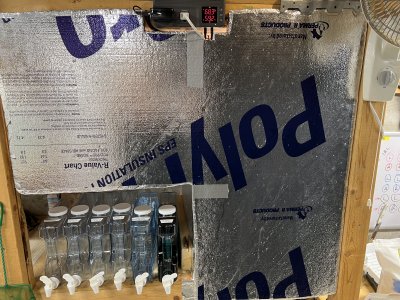
Good point on dry space. Time to think about that is now. And not everything needs to be a tent that 1” thick foam insulation board is cheap and so is duct tape.Good advice, thanks man.
Another pitfall of me joining the Farm as you were leaving. I was asking all these questions and rarely got any sort of advice. I ended up just saying screw it, and dove in. I knew there were better ways but couldn't get anyone to tell me why I shouldn't. I have a peat pellet germination dome but I didn't see the harm in going straight to hydroton. I only took temp and humidity into consideration. I am now a little wiser.
These are good mistakes to make. Not terribly detrimental but a great opportunity for a learning experience. We'll talk more in detail on right way to go about it when we get towards the end of this run.
I'll have to think a little more about a seperate veg tent. I'm not even sure where I'm gonna hang and dry this harvest. Come Christmas time, I'll have some disposable income to be making the necessary uprades I left out initially. Maybe by then I'll have a decent idea about what the hell I'm doing.
- Joined
- Apr 16, 2023
- Messages
- 4,366
- Reaction score
- 19,836
Duct tape is free 90 free for me and I've never taken offense to being called a hillbilly.Good point on dry space. Time to think about that is now. And not everything needs to be a tent that 1” thick foam insulation board is cheap and so is duct tape.
- Joined
- Apr 16, 2023
- Messages
- 4,366
- Reaction score
- 19,836
Also.. I saw you were sick so I hope you're feeling better, broGood point on dry space. Time to think about that is now. And not everything needs to be a tent that 1” thick foam insulation board is cheap and so is duct tape.
- Joined
- Apr 16, 2023
- Messages
- 4,366
- Reaction score
- 19,836
@Moe.Red
Alright. Let's talk potassium silicate. I just got a pound of it and am curious of any precautions I should be taking.
Also.. a couple questions
Being hygroscopic, I assume it should be stored in an airtight container. Can I still mix it in the same room, where all my resevoirs are?
You said a pound would be a lifetime supply. What would be the recommended dose/gallon?
Do I use measuring spoons, or go by weight?
Do I only use it in the RDWC or should it be continuously added by the top-off res?
Ph close to 11, then down to 5.8, then set overnight, right?
Some of those may be silly questions or easily answered by google. I overthink things and also find it much easier and efficient to get my info from someone interested in sharing it. Sifting google searches can be a nightmare. Maybe there's a sticky for it?
Alright. Let's talk potassium silicate. I just got a pound of it and am curious of any precautions I should be taking.
Also.. a couple questions
Being hygroscopic, I assume it should be stored in an airtight container. Can I still mix it in the same room, where all my resevoirs are?
You said a pound would be a lifetime supply. What would be the recommended dose/gallon?
Do I use measuring spoons, or go by weight?
Do I only use it in the RDWC or should it be continuously added by the top-off res?
Ph close to 11, then down to 5.8, then set overnight, right?
Some of those may be silly questions or easily answered by google. I overthink things and also find it much easier and efficient to get my info from someone interested in sharing it. Sifting google searches can be a nightmare. Maybe there's a sticky for it?
Last edited:

Rootsruler
Know it all
- Joined
- Apr 14, 2023
- Messages
- 3,267
- Reaction score
- 14,635
The Devil is ALWAYS in the details. You have one of the best sources for the style grow you want to do.
With Hydro you're God.
Knowing the details is a requirement to be God.
With Hydro you're God.
Knowing the details is a requirement to be God.
moe.red
hydro helper
- Joined
- Apr 1, 2023
- Messages
- 4,509
- Reaction score
- 25,331
It’s 5:00 am so I’ll come back and elaborate later but we are going to add the silica and the ph will head very high. We need to let that circulate for a day if possible. Then add ph down to 5.8, whatever that takes. Those 2 things together create a pair of byproducts a ph buffer and phantom available monosilic acid. Then go in the nutes and finally bennies.@Moe.Red
Alright. Let's talk potassium silicate. I just got a pound of it and am curious of any precautions I should be taking.
Also.. a couple questions
Being hygroscopic, I assume it should be stored in an airtight container. Can I still mix it in the same room, where all my resevoirs are?
You said a pound would be a lifetime supply. What would be the recommended dose/gallon?
Do I use measuring spoons, or go by weight?
Do I only use it in the RDWC or should it be continuously added by the top-off res?
Ph close to 11, then down to 5.8, then set overnight, right?
Some of those may be silly questions or easily answered by google. I overthink things and also find it much easier and efficient to get my info from someone interested in sharing it. Sifting google searches can be a nightmare. Maybe there's a sticky for it?
Probably need to figure out how to pull your net pot and keep it on life support while you do this until you get the ph down in.
Remind me your total water volume.
- Joined
- Apr 16, 2023
- Messages
- 4,366
- Reaction score
- 19,836
Haha no worries.It’s 5:00 am so I’ll come back and elaborate later but we are going to add the silica and the ph will head very high. We need to let that circulate for a day if possible. Then add ph down to 5.8, whatever that takes. Those 2 things together create a pair of byproducts a ph buffer and phantom available monosilic acid. Then go in the nutes and finally bennies.
Probably need to figure out how to pull your net pot and keep it on life support while you do this until you get the ph down in.
Remind me your total water volume.
As far as pulling the netpot, I planned on doing the mixing in my top-off resevoir, so shouldn't affect the plant res, correct? I'll just keep the float from filling with the solution.
I'll mix into 30 gallons. That's the capacity of my top-off res. The lower two hold approximately 15 gallons, together. Once mixed, I'll drain the lower two and pump in the new batch. That process takes ten minutes or so.
Makes sense to let it activate (or whatever) overnight and THEN bring the ph down. I'm not sure why I was thinking to bring it down THEN sit overnight.
After filling the lower two, I'll still have approximately 15 gallons above. I assume the silicate continues being added by the drip-feed, so that would be my final step. If not, I'll mix my original batch with a little more than 15 gallons, so it all gets used, then mix a new batch for above. But that batch wouldn't have the buffer? That's why I'm assuming it keeps getting added from above.
I too am in the central time zone and am running on no coffee as of yet.
moe.red
hydro helper
- Joined
- Apr 1, 2023
- Messages
- 4,509
- Reaction score
- 25,331
Yes bro, you got it. Mix it in the 30 gallon top off will be perfect.Haha no worries.
As far as pulling the netpot, I planned on doing the mixing in my top-off resevoir, so shouldn't affect the plant res, correct? I'll just keep the float from filling with the solution.
I'll mix into 30 gallons. That's the capacity of my top-off res. The lower two hold approximately 15 gallons, together. Once mixed, I'll drain the lower two and pump in the new batch. That process takes ten minutes or so.
Makes sense to let it activate (or whatever) overnight and THEN bring the ph down. I'm not sure why I was thinking to bring it down THEN sit overnight.
After filling the lower two, I'll still have approximately 15 gallons above. I assume the silicate continues being added by the drip-feed, so that would be my final step. If not, I'll mix my original batch with a little more than 15 gallons, so it all gets used, then mix a new batch for above. But that batch wouldn't have the buffer? That's why I'm assuming it keeps getting added from above.
I too am in the central time zone and am running on no coffee as of yet.
And yes, you will be feeding with buffered solution, which is great for veg.
At the point we get to flower, we will take a look at the plant and see what it needs. If it does not need more stalk strengthening (depends on genetics and the stretch) we will start to phase out silica sooner. You do not want to be in the full on flower bud fattening stage with much if any silica tho, it doesn't play well with buds IMO. We want those nice and tender.
And yes, time is critical to the proper mixing and getting the buffer set. And it needs to be set before putting in nutes as swings can cause your nutes to fall out of suspension wasting nutes and your silica.
- Joined
- Apr 16, 2023
- Messages
- 4,366
- Reaction score
- 19,836
You're so cool man. Much respect.Yes bro, you got it. Mix it in the 30 gallon top off will be perfect.
And yes, you will be feeding with buffered solution, which is great for veg.
At the point we get to flower, we will take a look at the plant and see what it needs. If it does not need more stalk strengthening (depends on genetics and the stretch) we will start to phase out silica sooner. You do not want to be in the full on flower bud fattening stage with much if any silica tho, it doesn't play well with buds IMO. We want those nice and tender.
And yes, time is critical to the proper mixing and getting the buffer set. And it needs to be set before putting in nutes as swings can cause your nutes to fall out of suspension wasting nutes and your silica.
I'll get the silica mixed tonight and in the morning we'll be on track and ready to rock and roll.
How quickly is the ph affected by the silicate? Should I mix well and wait several minutes to check it?
moe.red
hydro helper
- Joined
- Apr 1, 2023
- Messages
- 4,509
- Reaction score
- 25,331
When you put the silica in, the PH will shoot up to 9 - 11 range. Just leave it there for a while. A day would not hurt. It will initially be cloudy, this is because it takes time to become fully mixed up in the water. Especially with RO.You're so cool man. Much respect.
I'll get the silica mixed tonight and in the morning we'll be on track and ready to rock and roll.
How quickly is the ph affected by the silicate? Should I mix well and wait several minutes to check it?
Now bring it down to 5.8 with PH down. The conversion to monosilic acid is nearly instantaneous. stir it for a bit, verify the PH is stable over 10 or 20m minutes of stirring, then proceed.
- Joined
- Apr 16, 2023
- Messages
- 4,366
- Reaction score
- 19,836
Perfect. I'll keep you in the loop and up to date. Thanks again dudeWhen you put the silica in, the PH will shoot up to 9 - 11 range. Just leave it there for a while. A day would not hurt. It will initially be cloudy, this is because it takes time to become fully mixed up in the water. Especially with RO.
Now bring it down to 5.8 with PH down. The conversion to monosilic acid is nearly instantaneous. stir it for a bit, verify the PH is stable over 10 or 20m minutes of stirring, then proceed.
- Joined
- Apr 16, 2023
- Messages
- 4,366
- Reaction score
- 19,836
I mixed 8g KSiO into a quart of 5.2 pH RO. Mixed it well and let it sit approximately 10 minutes while the rez filled. Then, I slowly poured and mixed it into 30 gallons. I mixed with my paint mixer for 10 minutes. After 20-30 minutes, the ph reads 9.5
I'm gonna do a few dabs in here and head to bed. Nutes in the morning. Night ya'll.
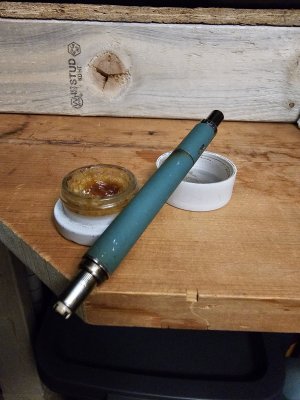
I'm gonna do a few dabs in here and head to bed. Nutes in the morning. Night ya'll.
- Joined
- Apr 16, 2023
- Messages
- 4,366
- Reaction score
- 19,836
Hey @Moe.Red ,
Am I good to add the nutes in there or should I have put more Silicate in? We had talked about getting the pH up towards 11 but is that still the case, since my RO is coming out close to 5? Is that drop from 9.5 to 7.5 normal? I found a post of yours talking about mixing 15-48g/gallon and then 38ml/gal of that solution. 38 x 30 came out just above a liter so my mixture was in the middle of that range. 8 grams in a quart, mixed well, added to rez.
We've got a garage to clean out today. Spring cleaning has arrived and our little town has set out the dumpsters.
Am I good to add the nutes in there or should I have put more Silicate in? We had talked about getting the pH up towards 11 but is that still the case, since my RO is coming out close to 5? Is that drop from 9.5 to 7.5 normal? I found a post of yours talking about mixing 15-48g/gallon and then 38ml/gal of that solution. 38 x 30 came out just above a liter so my mixture was in the middle of that range. 8 grams in a quart, mixed well, added to rez.
We've got a garage to clean out today. Spring cleaning has arrived and our little town has set out the dumpsters.
- Joined
- Apr 16, 2023
- Messages
- 4,366
- Reaction score
- 19,836
No down yet. I wanted to make sure I was clear to proceed at the 7.4 mark. It just seemed a little low compared to the 11 recommended, so I was looking for some clarification. Thanks for the quick response.Did you add the ph down? That is next if not. Then after you are stable at 5.8 goes the nutes. Cal mag first. Micro second.
Then after that is stable add bennies.
- Joined
- Apr 16, 2023
- Messages
- 4,366
- Reaction score
- 19,836
YeahIs this Agsil16?
- Joined
- Apr 16, 2023
- Messages
- 4,366
- Reaction score
- 19,836
"How do I properly use a potassium silicate?OK let me look this up brb
First, if using a solid, you need to prepare a stock solution no more concentrated than 45g/L. The recommendation with AgSil 16H would be to prepare a stock solution at 15g/gal and then using this solution at a rate of 38mL/gal of final solution (injection rate of 1%). To increase the stability of your AgSil 16H concentrate you can add 1g/gal of KOH. The end addition to your solution will be +9.8ppm of Si as elemental Si and +11.55ppm of K. The KOH addition and low 15g/gal concentration ensures that silicate will already be largely present as monomeric silicate anions."
In the thread called BUFFERING
moe.red
hydro helper
- Joined
- Apr 1, 2023
- Messages
- 4,509
- Reaction score
- 25,331
Potassium silicate
This is a soluble form of silicon that is stable at high pH values. While solutions of potassium silicate by itself can be prepared and used as a pH up option, it is usually stabilized with a small addition of potassium hydroxide to take the pH of solutions to the 11-12 range. Potassium silicate contributes both potassium and silicon to hydroponic solutions – both important nutrients – and its use can be more beneficial than the use of pure potassium hydroxide. While silicates are less basic and more mass is required for the same pH buffering effect, the preparation and handling can often be much simpler than those of potassium hydroxide.Note that potassium silicate solutions are also unstable when left in open air, as they will also react with atmospheric carbon dioxide to generate potassium carbonate. It is also worth noting that not all potassium silicates are the same, when looking for a highly soluble potassium silicate for hydroponics, make sure you get potassium silicates that have higher K/Si ratios. Usually ratios of at least 1.05 are required (make sure you convert both K and Si to their elemental forms, as most of these products report K as K2O and Si as SiO2).
AgSil 16h is a 1.6 weight ratio (SiO2 : K2O), hydrous potassium silicate powder with 32% K2O and 52.8% SiO2 and 14.8% H2O. We had it analyzed by a laboratory using the AAPFCO approved method and the results showed 17.37% soluble silicon. Silicon is a plant beneficial element.
Please reads this article for complete background. Make sure to load the comments at the bottom. @Anthem275 the K availability has been confirmed:
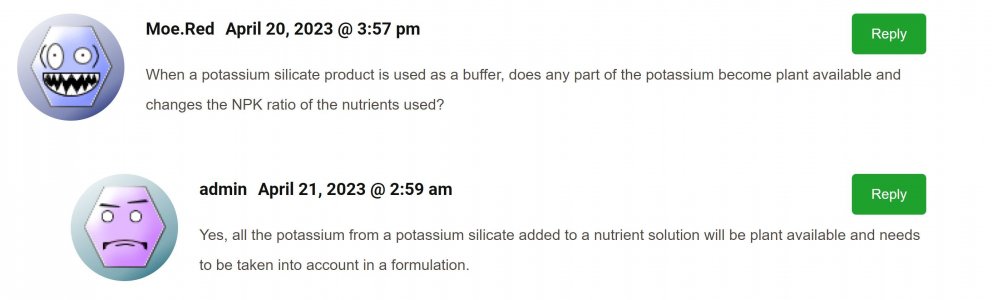
@SweetLeafGrow this confirms that Agsil 16 will in fact add potassium and must be accounted for. The details and PPMs are in the link above.
@grump I need to get some Agsil myself and try this. I use a straight Potassium Silicate powder and it reacts a little differently. Based on what I have read, I think you are doing it right and can proceed. If you were doing a concentrate to add in like nutes, you did not add enough. But you are trying to set up your res, not create a concentrate right now.

- Joined
- Apr 1, 2023
- Messages
- 1,687
- Reaction score
- 9,047
Could aquarium npk test strips be used to determine what's out of balance in the nutrient solution?Potassium silicate
This is a soluble form of silicon that is stable at high pH values. While solutions of potassium silicate by itself can be prepared and used as a pH up option, it is usually stabilized with a small addition of potassium hydroxide to take the pH of solutions to the 11-12 range. Potassium silicate contributes both potassium and silicon to hydroponic solutions – both important nutrients – and its use can be more beneficial than the use of pure potassium hydroxide. While silicates are less basic and more mass is required for the same pH buffering effect, the preparation and handling can often be much simpler than those of potassium hydroxide.
Note that potassium silicate solutions are also unstable when left in open air, as they will also react with atmospheric carbon dioxide to generate potassium carbonate. It is also worth noting that not all potassium silicates are the same, when looking for a highly soluble potassium silicate for hydroponics, make sure you get potassium silicates that have higher K/Si ratios. Usually ratios of at least 1.05 are required (make sure you convert both K and Si to their elemental forms, as most of these products report K as K2O and Si as SiO2).
AgSil 16h is a 1.6 weight ratio (SiO2 : K2O), hydrous potassium silicate powder with 32% K2O and 52.8% SiO2 and 14.8% H2O. We had it analyzed by a laboratory using the AAPFCO approved method and the results showed 17.37% soluble silicon. Silicon is a plant beneficial element.
Please reads this article for complete background. Make sure to load the comments at the bottom. @Anthem275 the K availability has been confirmed:
View attachment 1526
@SweetLeafGrow this confirms that Agsil 16 will in fact add potassium and must be accounted for. The details and PPMs are in the link above.
@grump I need to get some Agsil myself and try this. I use a straight Potassium Silicate powder and it reacts a little differently. Based on what I have read, I think you are doing it right and can proceed. If you were doing a concentrate to add in like nutes, you did not add enough. But you are trying to set up your res, not create a concentrate right now.
- Joined
- Apr 16, 2023
- Messages
- 4,366
- Reaction score
- 19,836
The probe was reading 4.5 in 4.0 solution, while the pen read 4.0 so I recalibrated the probe.My pH pen shows 5.9 and the pH probe shows 6.4. Both are calibrated. Which one of these is the more accurate untensil? Both Bluelab


- Joined
- Apr 1, 2023
- Messages
- 972
- Reaction score
- 5,956
What cracks me up is my $15 chinese tds pen tracks perfectly w my groline monitor. No idea how long it will do this for but at that price I dont really care.
- Joined
- Apr 16, 2023
- Messages
- 4,366
- Reaction score
- 19,836
I calibrated them both for shits and gigs and they still read .3 different from each other. The pen says 5.8 and my probe 6.1. I want to go off of the probe, since it'll be in the res, but I also kinda wanna agree with the pen so I don't need to add any pH DownWhat cracks me up is my $15 chinese tds pen tracks perfectly w my groline monitor. No idea how long it will do this for but at that price I dont really care.

- Joined
- Apr 1, 2023
- Messages
- 1,687
- Reaction score
- 9,047
Might try to rehydrate your pen
How to hydrate your Bluelab pH pens and probes
Hydration is essential for accurate pH pens and probes. Read this guide on Bluelab pH Probe and Bluelab pH Pen hydration.
support.bluelab.com
- Joined
- Apr 16, 2023
- Messages
- 4,366
- Reaction score
- 19,836
It was 2 or 3 weeks ago that everything was hydrated and calibrated. I've added a couple drops of KCl to the pen's lid twice now. Could the fact that I'm using RO/DI water be a problem or is that just referring to prolonged exposure? I guess I missed that little tidbit when I was reading the manual. Seems like you should at least be able to check the pH of the RO/DI without damaging things, but I don't know nothing.Might try to rehydrate your pen
How to hydrate your Bluelab pH pens and probes
Hydration is essential for accurate pH pens and probes. Read this guide on Bluelab pH Probe and Bluelab pH Pen hydration.support.bluelab.com
I just looked up Agasil and it is like 0-0-32. While it is a great product for adding silicon and the buffering capacity it will create too many problems with a standard nutrient mix like GH Trio or even a dry salt formulation for the hobby grower. Thanks for posting!!!!Potassium silicate
This is a soluble form of silicon that is stable at high pH values. While solutions of potassium silicate by itself can be prepared and used as a pH up option, it is usually stabilized with a small addition of potassium hydroxide to take the pH of solutions to the 11-12 range. Potassium silicate contributes both potassium and silicon to hydroponic solutions – both important nutrients – and its use can be more beneficial than the use of pure potassium hydroxide. While silicates are less basic and more mass is required for the same pH buffering effect, the preparation and handling can often be much simpler than those of potassium hydroxide.
Note that potassium silicate solutions are also unstable when left in open air, as they will also react with atmospheric carbon dioxide to generate potassium carbonate. It is also worth noting that not all potassium silicates are the same, when looking for a highly soluble potassium silicate for hydroponics, make sure you get potassium silicates that have higher K/Si ratios. Usually ratios of at least 1.05 are required (make sure you convert both K and Si to their elemental forms, as most of these products report K as K2O and Si as SiO2).
AgSil 16h is a 1.6 weight ratio (SiO2 : K2O), hydrous potassium silicate powder with 32% K2O and 52.8% SiO2 and 14.8% H2O. We had it analyzed by a laboratory using the AAPFCO approved method and the results showed 17.37% soluble silicon. Silicon is a plant beneficial element.
Please reads this article for complete background. Make sure to load the comments at the bottom. @Anthem275 the K availability has been confirmed:
View attachment 1526I just l
@SweetLeafGrow this confirms that Agsil 16 will in fact add potassium and must be accounted for. The details and PPMs are in the link above.
@grump I need to get some Agsil myself and try this. I use a straight Potassium Silicate powder and it reacts a little differently. Based on what I have read, I think you are doing it right and can proceed. If you were doing a concentrate to add in like nutes, you did not add enough. But you are trying to set up your res, not create a concentrate right now.
- Joined
- Apr 16, 2023
- Messages
- 4,366
- Reaction score
- 19,836
Well I'm gonna run with it. Maybe I could cut back some on the Gro to limit a little of the K dosage. This is my first time so that might be a bad idea.. just brainstorming.I just looked up Agasil and it is like 0-0-32. While it is a great product for adding silicon and the buffering capacity it will create too many problems with a standard nutrient mix like GH Trio or even a dry salt formulation for the hobby grower. Thanks for posting!!!!

Moshmen
Dirty soil guy
- Joined
- Apr 2, 2023
- Messages
- 1,534
- Reaction score
- 8,124
I don’t ck ph often cuz I’m in dirt but I thru my pen away y2 years ago use drops exclusivelyThe probe was reading 4.5 in 4.0 solution, while the pen read 4.0 so I recalibrated the probe.
- Joined
- Apr 1, 2023
- Messages
- 1,687
- Reaction score
- 9,047
Yea, you could do that but, how much grow are you going to cut back and is that enough? Maybe eliminate the bloom too if cutting back on the grow isn't enough............Well I'm gonna run with it. Maybe I could cut back some on the Gro to limit a little of the K dosage. This is my first time so that might be a bad idea.. just brainstorming.
Balancing your formula on your own is possible for some, but above my pay scale
moe.red
hydro helper
- Joined
- Apr 1, 2023
- Messages
- 4,509
- Reaction score
- 25,331
Ok sorry I missed so much.
I’m not going all technical on this post but I’ve been running potassium silicate successfully with gh for several years and I don’t get burn.
Agsil is the best product on the market per the science in hydro links I posted. It is what I will use when I run out but I have not used it yet personally.
I’ll try to do some math on this and explain it in layman’s terms but pot sil does work and is very effective. I don’t use it long into flower which helps keep the bloom nutes in the right proportions
I’m not going all technical on this post but I’ve been running potassium silicate successfully with gh for several years and I don’t get burn.
Agsil is the best product on the market per the science in hydro links I posted. It is what I will use when I run out but I have not used it yet personally.
I’ll try to do some math on this and explain it in layman’s terms but pot sil does work and is very effective. I don’t use it long into flower which helps keep the bloom nutes in the right proportions
- Joined
- Apr 16, 2023
- Messages
- 4,366
- Reaction score
- 19,836
PH continued to drift up after mixing a batch of nutes. It hovered around 6.1 so I've hit it with a total of 6ml of down. We'll see where she settles.
No root yet but she seems to still be hanging in there.
No root yet but she seems to still be hanging in there.
- Joined
- Apr 16, 2023
- Messages
- 4,366
- Reaction score
- 19,836
Similar threads


- Replies
- 2
- Views
- 967


- Replies
- 21
- Views
- 3K

