Bud Builders - Making Friends, Growing Cannabis

Register a free account today to become a Bud Builders member! Once signed in, you'll be able to participate on our site by adding your own topics and posts, as well as connect with other members through your own private inbox.

Join the fun and make some friends!

Red's Thread ~ All things Cannabis

I’ll make all files and software freely available to anyone that wants them. A good 3D printer is pretty much a must to do this.

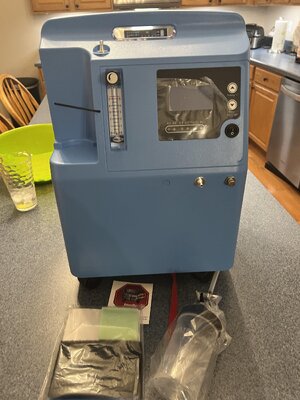
This round I have a much larger machine if it ever shows up. I was not able to maintain 300% in the larger grow. Works great on the cloner.

This is the backup plan

IMG_4700.png
 
ahhh yeah!!!!! badass!!!!

so your tanks of nutrients are all in bulk like that all plumbed up like that so you don't even use beakers and bottles to mix up your solutions? do you just open a valve? too cool!!!
 
ahhh yeah!!!!! badass!!!!

so your tanks of nutrients are all in bulk like that all plumbed up like that so you don't even use beakers and bottles to mix up your solutions? do you just open a valve? too cool!!!
Those tanks are filled with RO and nutes plus Bennie’s.

They gravity feed each tote individually. This allows me to dial in each set of 2 plants individually

I’m also going to be testing different Bennie’s. I’m not sure what will happen at 90% o2. I got no roadmap here so I’m winging it.

I’ll show you my colony tank this weekend. Basically I run microbe food plus RO and a weak veg nute solution thru the autoclave to sterilize. Then populate a sterile tank with the food and orca. I draw off that tank and add in weekly. Endless supply of live active bacteria in numbers that can out compete anything. But what happens now that I have a chance of hitting and sustaining near o2 saturation?

Who wins? Bacillus loves o2. We will see.
 
Those tanks are filled with RO and nutes plus Bennie’s.

They gravity feed each tote individually. This allows me to dial in each set of 2 plants individually

I’m also going to be testing different Bennie’s. I’m not sure what will happen at 90% o2. I got no roadmap here so I’m winging it.

I’ll show you my colony tank this weekend. Basically I run microbe food plus RO and a weak veg nute solution thru the autoclave to sterilize. Then populate a sterile tank with the food and orca. I draw off that tank and add in weekly. Endless supply of live active bacteria in numbers that can out compete anything. But what happens now that I have a chance of hitting and sustaining near o2 saturation?

Who wins? Bacillus loves o2. We will see.

thats really awesome, the microbes are amped up and full of life from the second they're introduced. kinda like organic soil growers do with a brewed tea and it's no secret on how much plants love that!!

i have a feeling you're gonna crush your tests in this, everything sounds like a recipe for success!

how many plants total are you guys starting out with? (not germinating but actual number of plants in the system to start)
 
thats really awesome, the microbes are amped up and full of life from the second they're introduced. kinda like organic soil growers do with a brewed tea and it's no secret on how much plants love that!!

i have a feeling you're gonna crush your tests in this, everything sounds like a recipe for success!

how many plants total are you guys starting out with? (not germinating but actual number of plants in the system to start)
8 plants total 2 per tote.
 
So what is your prediction on what impact the o2 will have on ph?
Got me thinking and looking into it, I don't think it'll be much, negligible RATE of decrease or increase?

Depending on you're nutrient solution chemistry too, ie; uptake of NO3, as well as increased root zone respiration from elevated DO/O2 levels, meaning the plant excretes H+ ions more often?

Still pondering.

Need to see it running.

So DO in its self, is not much of a variable to pH influence, but will influence the biochemical processes , which will indirectly affect pH, how so, I'm not sure, I know you're working with buffers and different bases and acids than most growers here.
 
Last edited:
Elevated O₂ levels could enhance the oxidation of organic matter in the water, potentially leading to the production of acids, which might lower pH over time. However, in a well-maintained system with proper nutrient balance, this effect should be minimal.

And I think you have a well-maintained system

You're bennies will be a factor too, in the science.
 
Elevated O₂ levels could enhance the oxidation of organic matter in the water, potentially leading to the production of acids, which might lower pH over time. However, in a well-maintained system with proper nutrient balance, this effect should be minimal.

And I think you have a well-maintained system

You're bennies will be a factor too, in the science.
This will only affect organic compounds. Of which the bennies will chew up before oxidation can. This also produces acids so basically any organic matter produces acids no matter what. So i see no change to PH vs without using o2.

O2 in the rootzone affects growth like co2 in the atmosphere . It makes processes more efficient which increases the photosynthetic rates and in turn the plants ability to make and utilize energy thus increasing growth rates.

This can be seen just based on the media we use. Eg. Soil, coco, hydro or aero. The difference between these is the concentration of o2 and gas exchange.

Another impacting factor is that both increased co2 n the rootzone and increased o2 in the atmosphere will reduce photosynthetic rates. Slowing growth.

IMO what moe is doing will greatly impact photosynthetic rates and in turn growth rates and plant health as well as efficiency of nutrient uptake
 
Last edited:
Oxygenation and its influence on crops
Although some contradictory results have been reported regarding the use of methods to enrich the growth medium of crops with oxygen, especially with uncontrolled environment conditions (Urrestarazu and Mazuela, 2005; Bonachela et al., 2007), various experiments with production of plants under greenhouse, either in nutrient solution or in substrate, indicate that high levels of oxygenation they accelerate development and increase yields, as a result of the improvement in anatomical-physiological processes and increase in the hydraulic conductivity of the roots, greater mineral absorption and more efficient photosynthesis (Urrestarazu et al., 2006).
Morard et al. (2000) reported in melon (Cucumis melo L.), with a radical development of 25 g L-1 and nutrient solution at 20 °C, that the saturation concentration of 8 mg L-1 is reduced to 0 mg L-1 in 60 min, if there is no oxygen replenishment. The oxygen supply in rose (Rosa sp.) Increased the activity of the enzyme alcohol dehydrogenase (ADH), improved the growth and development of roots and stems. In tomato (Solanum lycopersicum L.).
Experiments by Goorahoo et al. (2002) with drip tape 12-15 cm deep and studies by Bhattarai et al. (2006) with tape at 8 to 30 cm depth, showed the benefits of oxygenation. The data showed that the increase in yield of pepper fruit (Capsicum annuum L.) reached its maximum value at 25 m from the aeration source and then decreased over 35 m, equaling the yield of the pitches without aeration.
In oxygenation tests with air injection with venturi and hydrogen peroxide in a clay soil cultivated with tomato, soybean (Glycine maxL.) and cotton (Gosipium irsutum L.), yield increases of 12, 84 and 21% were obtained , respectively, compared to the control (Bhattarai et al., 2006). Similarly, in clay and sandy loam soil, venturi oxygenation produced an increase of 33 and 39%, respectively, in the total weight of pepper fruit (Goorahoo et al., 2002).
Soy adapted to prolonged oxygen deficiency producing adventitious roots, the stem showed hypertrophy and developed an aerenchyma for the transport of O2 to the roots (Boru et al., 2003). The efficiency of the use of water (EUA) with oxygenation was 11% higher (39.1 versus 35.2 g L-1) for tomato, 70% (3.65 versus 2.15 g L-1) for soybeans and 18% (0.45 versus 0.38 g L-1) for cotton in a clay soil (Bhattarai et al., 2006) and 36% (1.46 versus 0.94 kg m-3) for corn in a clay-sandy loam soil (Abuarab et al., 2012).
Other EUA effects, such as the photosynthesis/net leaf transpiration ratio, were also greater with oxygenation (Bhattarai et al., 2006). Urrestarazu and Mazuela (2005) supplied O2 with potassium peroxide (1 g L-1) to pepper and melon, finding a yield of 20 and 15% higher, respectively, with oxygenation; but there were no significant differences in cucumber.
In this regard, Urrestarazu et al. (2006) indicate that the application of a chemical oxygenator to the irrigation solution significantly increases the availability of O2, translating into higher fruit yield per plant. Underground irrigation with 12% air in the water, stimulated growth and improved reproductive performance by advancing flowering and fruiting in tomatoes, and increased yield by 21%, the effect of aeration was greater in soil at field capacity (CC) in relation to the soil with water stress; while in saline soil, the increase was 38% in relation to the soil without aeration.
In both cases, the efficiency of water use increased, 16% in humidity experiments and 32% in salinity. The increase in yield with aeration was also accompanied by a higher harvest index (IC), higher fruit weight, and a lower water stress index. The benefit obtained by the oxygenation of the irrigation water was not only observed in conditions in which the air porosity was low (sodium soils with poor structure or at CC in clay soils), but also in soils with less moisture availability.
CC irrigation in clay soil generated a lower concentration of O2 in the rhizosphere, but aeration improved the concentration of dissolved O2 and increased tomato yield, since aeration avoided hypoxia (Bhattarai et al., 2006). Another study by Bonachela et al. (2007)demonstrated that oxygenation of the substrate solution in pepper and tomato cultivation avoided hypoxic conditions, while O2deficiencies occurred in melon during the second half of the cultivation cycle, when high environmental temperatures occurred and the plant had developed its radical system and complete canopy.
In rose plants that received oxifertigation treatments, the leaf area, the dry weight of leaves and flowers were higher, especially in those that grew on fine particle substrates with the presence of hypoxia (Carazo et al., 2008). In these periods, enriching the nutrient solution provided with O2, by managing irrigation rafts or artificial contributions of O2, can improve crop growth conditions and consequently their productivity (Bonachela et al., 2008).
In the arugula culture (Eruca sativa Mill), different doses of peroxyacetic acid (CH3CO3H) were evaluated in the nutritive solution, determining that 40 mg L-1 produced higher yield compared to plants grown in perlite without addition of this acid (Carrasco et al., 2010). In the parameters of fertigation, production and quality of melon fruits, the application of the oxygenating potassium peroxide increased the absorption and the efficiency of water use in terms of kilograms produced per liter of water consumed.
There were no differences in fruit yield and quality, which was attributed to the absence of O2 deficiency in the control treatment and to periods of hypoxia of insufficient intensity or duration to significantly affect productivity (Mazuela, 2010). With the injection of air in subsurface drip irrigation, potato productivity increased, the yield was 27.11 and 17.8%. Also, it was higher in the air injection treatment, compared to drip irrigation (RG) and underground drip irrigation (RGS), respectively, in the first cycle, but it was 38.2 and 7.66% higher than RG and RGS, respectively, in the second cycle. In the air injection treatment, compared to the treatments without aeration (RG) and (RGS), the efficient use of water (UEA) was 46.41 and 30.52% higher in the first cycle, and was 61.78 and 19.33% higher than in RG and RGS, respectively, for the second cycle.
The plant height was 14.7 and 6.07% higher in the air injection treatment than in the control (RG) and (RGS), respectively, for the first cycle, while it was 14.13 and 9.7% higher than in the controls in the second cycle. The weight of the shoots per plant was 14.8 and 4.61% higher in the air treatment than in RG and RGS, respectively, for the first cycle, while it was 37.6 and 1.94% higher for the second cycle.
These data indicate that potato yield can be improved in underground drip irrigation if the water is aerated (Mohamed et al., 2014). Carazo (2015) reported that oxy-irrigation favored productivity in rose (number of flowers, number and weight of fruits), quality (weight and length of cut flower, duration of cut flower, weight and leaf and root surface of cuttings, rooted seedling) and development in various aspects (biometric parameters, mineral content).
When air is injected into the water within the root zone, the diffusion of ethylene and carbon dioxide outside the rhizosphere increases, leading to better plant growth conditions. Increased yields and potential improvement in soil quality associated with aeration of the root zone implies the adoption of air injection technology in the irrigation system as a tool to increase crop productivity (Mohamed et al., 2014).
 
I also feel it will help stabilize ph fluctuations as driving off the co2 produced from microbes and plants respiration instead of letting it build up will reduce the formation of carbonic acid which IMO has the largest effect on PH in the rootzone.
 
I’ll need to read that when I get to pc. Thx for posting

This is Sal khan taking about o2 vs co2 dissolving in water


CO2 is waaaay more soluble.
In the past I have been pumping co2 into the res constantly thru the airstones. And spraying co2 via tank.

In this scenario I will not be contributing any co2. The only bits there will be from exudates.

My prediction is carbonic acid will no longer have any impact on ph and I will see greater stability.
 
I’ll need to read that when I get to pc. Thx for posting

This is Sal khan taking about o2 vs co2 dissolving in water


CO2 is waaaay more soluble.
In the past I have been pumping co2 into the res constantly thru the airstones. And spraying co2 via tank.

In this scenario I will not be contributing any co2. The only bits there will be from exudates.

My prediction is carbonic acid will no longer have any impact on ph and I will see greater stability.
Absolutely co2 is easy to dissolve in water o2 not so much. Which is why i feel fog and aero to be the easiest way to accomplish extremely high levels of o2. Short of using something like a rex griggs reactor or other sort of pressure vessel to force o2 into the water the next best and by far the easiest is to manipulate henrys law. That why you only need the o2 to saturate the air above the water and provide water column mixing and surface agitation to facilitate gas exchange.

IMO having a diffuser in the water will make 0 to negligible difference as the gas exchange will happen at the surface based on the gas makeup of the air just above surface…. There is not enough dwell time or pressure to accomplish tgis without a pressure vessel.

I have used them for dissolving co2 to control water pH but like you said co2 is completely different and much more soluble… especially when injected into a rex griggs reactor or other method that increases the dwell time and pressure that the gas is exposed to
 
I added a small pump with a Venturi on this setup. Sits next to the ultrasonic in the tray and creates a circular motion in the water. O2 is injected through the Venturi.

Each pump timing is software controlled so I can experiment with using them almost like a valve.

In the past I was not able to achieve the do levels I thought I should be capable of, but with the pump and bigger concentrator I have hope of all 4 totes sitting at 300% atmospheric. Even with not hitting my target plants still exploded
 
Smol plant count.

Fjcking with you, I know it's a lot more involved to set up these plant zones.
I’m at the other end of the spectrum from you brother. My favorite grows were 2 plant RDWC in a 4x8 tent giving each plant 16 ft square.

I probably could have done 500 solos in that space. Don’t think I have the patience for that
 
I’ll need to read that when I get to pc. Thx for posting

This is Sal khan taking about o2 vs co2 dissolving in water


CO2 is waaaay more soluble.
In the past I have been pumping co2 into the res constantly thru the airstones. And spraying co2 via tank.

In this scenario I will not be contributing any co2. The only bits there will be from exudates.

My prediction is carbonic acid will no longer have any impact on ph and I will see greater stability.
Another calculation to this equation that is not addressed is exactly as he said. Molecules leaving the water.

Gases try to reach equilibrium (equalize) they all do this based solubility. For o2 21% atmospheric equals around 8mg/L dissolved o2 at our temps. By increasing atmospheric o2 we can increase that as they try to reach equilibrium.

In the same breath we can pull co2 from the water even though it is extremely soluble by reducing tge co2 in the air. Which is what an o2 concentrator also does. It removes the nitrogen and co2 and diverts them out the exhaust side leaving high o2 and low co2 when compared to atmospheric norms.

So as the water tries to reach equilibrium we are increasing o2 and decreasing co2 which are both extremely beneficial to the rhizosphere
 
I added a small pump with a Venturi on this setup. Sits next to the ultrasonic in the tray and creates a circular motion in the water. O2 is injected through the Venturi.

Each pump timing is software controlled so I can experiment with using them almost like a valve.

In the past I was not able to achieve the do levels I thought I should be capable of, but with the pump and bigger concentrator I have hope of all 4 totes sitting at 300% atmospheric. Even with not hitting my target plants still exploded
Venturi imo is the way to go… you get both the mixing and injection at once.

But you already know all of this.

I’m so pumped to see you do this and hopefully that concentrator keeps up for you.

Moe has some NASA level understanding and equipment here…. So pumped
 
Got 2 ac infinity fans this am. Bought a hose last night. Today is water test with tap plus chlorine to check for leaks and sterilize to start.

Calibrate probes

Check the o2 curves once I turn on the concentrator. Should be a fun day. If all goes well I’m ready to grow tomorrow. Pumped.
 
Oxygenation and its influence on crops
Although some contradictory results have been reported regarding the use of methods to enrich the growth medium of crops with oxygen, especially with uncontrolled environment conditions (Urrestarazu and Mazuela, 2005; Bonachela et al., 2007), various experiments with production of plants under greenhouse, either in nutrient solution or in substrate, indicate that high levels of oxygenation they accelerate development and increase yields, as a result of the improvement in anatomical-physiological processes and increase in the hydraulic conductivity of the roots, greater mineral absorption and more efficient photosynthesis (Urrestarazu et al., 2006).
Morard et al. (2000) reported in melon (Cucumis melo L.), with a radical development of 25 g L-1 and nutrient solution at 20 °C, that the saturation concentration of 8 mg L-1 is reduced to 0 mg L-1 in 60 min, if there is no oxygen replenishment. The oxygen supply in rose (Rosa sp.) Increased the activity of the enzyme alcohol dehydrogenase (ADH), improved the growth and development of roots and stems. In tomato (Solanum lycopersicum L.).
Experiments by Goorahoo et al. (2002) with drip tape 12-15 cm deep and studies by Bhattarai et al. (2006) with tape at 8 to 30 cm depth, showed the benefits of oxygenation. The data showed that the increase in yield of pepper fruit (Capsicum annuum L.) reached its maximum value at 25 m from the aeration source and then decreased over 35 m, equaling the yield of the pitches without aeration.
In oxygenation tests with air injection with venturi and hydrogen peroxide in a clay soil cultivated with tomato, soybean (Glycine maxL.) and cotton (Gosipium irsutum L.), yield increases of 12, 84 and 21% were obtained , respectively, compared to the control (Bhattarai et al., 2006). Similarly, in clay and sandy loam soil, venturi oxygenation produced an increase of 33 and 39%, respectively, in the total weight of pepper fruit (Goorahoo et al., 2002).
Soy adapted to prolonged oxygen deficiency producing adventitious roots, the stem showed hypertrophy and developed an aerenchyma for the transport of O2 to the roots (Boru et al., 2003). The efficiency of the use of water (EUA) with oxygenation was 11% higher (39.1 versus 35.2 g L-1) for tomato, 70% (3.65 versus 2.15 g L-1) for soybeans and 18% (0.45 versus 0.38 g L-1) for cotton in a clay soil (Bhattarai et al., 2006) and 36% (1.46 versus 0.94 kg m-3) for corn in a clay-sandy loam soil (Abuarab et al., 2012).
Other EUA effects, such as the photosynthesis/net leaf transpiration ratio, were also greater with oxygenation (Bhattarai et al., 2006). Urrestarazu and Mazuela (2005) supplied O2 with potassium peroxide (1 g L-1) to pepper and melon, finding a yield of 20 and 15% higher, respectively, with oxygenation; but there were no significant differences in cucumber.
In this regard, Urrestarazu et al. (2006) indicate that the application of a chemical oxygenator to the irrigation solution significantly increases the availability of O2, translating into higher fruit yield per plant. Underground irrigation with 12% air in the water, stimulated growth and improved reproductive performance by advancing flowering and fruiting in tomatoes, and increased yield by 21%, the effect of aeration was greater in soil at field capacity (CC) in relation to the soil with water stress; while in saline soil, the increase was 38% in relation to the soil without aeration.
In both cases, the efficiency of water use increased, 16% in humidity experiments and 32% in salinity. The increase in yield with aeration was also accompanied by a higher harvest index (IC), higher fruit weight, and a lower water stress index. The benefit obtained by the oxygenation of the irrigation water was not only observed in conditions in which the air porosity was low (sodium soils with poor structure or at CC in clay soils), but also in soils with less moisture availability.
CC irrigation in clay soil generated a lower concentration of O2 in the rhizosphere, but aeration improved the concentration of dissolved O2 and increased tomato yield, since aeration avoided hypoxia (Bhattarai et al., 2006). Another study by Bonachela et al. (2007)demonstrated that oxygenation of the substrate solution in pepper and tomato cultivation avoided hypoxic conditions, while O2deficiencies occurred in melon during the second half of the cultivation cycle, when high environmental temperatures occurred and the plant had developed its radical system and complete canopy.
In rose plants that received oxifertigation treatments, the leaf area, the dry weight of leaves and flowers were higher, especially in those that grew on fine particle substrates with the presence of hypoxia (Carazo et al., 2008). In these periods, enriching the nutrient solution provided with O2, by managing irrigation rafts or artificial contributions of O2, can improve crop growth conditions and consequently their productivity (Bonachela et al., 2008).
In the arugula culture (Eruca sativa Mill), different doses of peroxyacetic acid (CH3CO3H) were evaluated in the nutritive solution, determining that 40 mg L-1 produced higher yield compared to plants grown in perlite without addition of this acid (Carrasco et al., 2010). In the parameters of fertigation, production and quality of melon fruits, the application of the oxygenating potassium peroxide increased the absorption and the efficiency of water use in terms of kilograms produced per liter of water consumed.
There were no differences in fruit yield and quality, which was attributed to the absence of O2 deficiency in the control treatment and to periods of hypoxia of insufficient intensity or duration to significantly affect productivity (Mazuela, 2010). With the injection of air in subsurface drip irrigation, potato productivity increased, the yield was 27.11 and 17.8%. Also, it was higher in the air injection treatment, compared to drip irrigation (RG) and underground drip irrigation (RGS), respectively, in the first cycle, but it was 38.2 and 7.66% higher than RG and RGS, respectively, in the second cycle. In the air injection treatment, compared to the treatments without aeration (RG) and (RGS), the efficient use of water (UEA) was 46.41 and 30.52% higher in the first cycle, and was 61.78 and 19.33% higher than in RG and RGS, respectively, for the second cycle.
The plant height was 14.7 and 6.07% higher in the air injection treatment than in the control (RG) and (RGS), respectively, for the first cycle, while it was 14.13 and 9.7% higher than in the controls in the second cycle. The weight of the shoots per plant was 14.8 and 4.61% higher in the air treatment than in RG and RGS, respectively, for the first cycle, while it was 37.6 and 1.94% higher for the second cycle.
These data indicate that potato yield can be improved in underground drip irrigation if the water is aerated (Mohamed et al., 2014). Carazo (2015) reported that oxy-irrigation favored productivity in rose (number of flowers, number and weight of fruits), quality (weight and length of cut flower, duration of cut flower, weight and leaf and root surface of cuttings, rooted seedling) and development in various aspects (biometric parameters, mineral content).
When air is injected into the water within the root zone, the diffusion of ethylene and carbon dioxide outside the rhizosphere increases, leading to better plant growth conditions. Increased yields and potential improvement in soil quality associated with aeration of the root zone implies the adoption of air injection technology in the irrigation system as a tool to increase crop productivity (Mohamed et al., 2014).
I just woke up man

Ima read all this when I get around lol

Thanks for posting this man missed ya around
 
This will only affect organic compounds. Of which the bennies will chew up before oxidation can.
ah didnt know the bennies would be faster
This also produces acids so basically any organic matter produces acids no matter what. So i see no change to PH vs without using o2
O2 in the rootzone affects growth like co2 in the atmosphere . It makes processes more efficient which increases the photosynthetic rates and in turn the plants ability to make and utilize energy thus increasing growth rates.

This can be seen just based on the media we use. Eg. Soil, coco, hydro or aero. The difference between these is the concentration of o2 and gas exchange.

Another impacting factor is that both increased co2 n the rootzone and increased o2 in the atmosphere will reduce photosynthetic rates. Slowing growth.

IMO what moe is doing will greatly impact photosynthetic rates and in turn growth rates and plant health as well as efficiency of nutrient uptake
Yup, everything is tuned to its Max efficiency about, it doesn't get much better than this.

Can't wait to see it and replicate it later.
 
wow Moe that's a lot more mist than i had pictured in my head... looks awesome man!!!
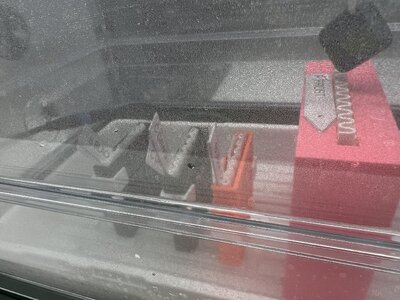
That ultrasonic disk is too low. I have to fine tune things a bit. Based on where the water level ended up with the float valve adjusted I need to space them up about 1.5mm. So I'll print a few giant washers to slide in underneath. Tweaking tweaking tweaking.

Once the fog position is set correctly there is significantly more fog. That allows for shorter duration which heats the water less.

Here is the code for the 6 bank AC outlet
 

Attachments

Yea, there seems to be a "sweet spot" for the water level where the disc is at.

Are you using a manifold to disperse the o2 from the concentrator into 4 zones?
 
Man I think I need to get a microphone if I am going to keep this up. Either that or learn how not to mumble.

View attachment 84272

you're good man.. just gotta pause the football game to hear ya. hehehe

.

when i made that little humidifier for the dry box i found that manufactures suggested water level was not the best. just like you did i shimmed a little here and there till it looked the most. other than rh which is pegged i'm sure, is there a way to measure the amount of fog density other than eye balling it?

question(s) for ya, i'm going to try the perlite/coco netcups and wanted to know how tight or loose i should pack them?
how about when adding O2, you said no perlite for that is optimum but do you go denser or looser because of the O2?

ya know i was thinking if @SomewhatPurpleish has some spare time he could separate all the perlite out for you.. ;wedg
 
Back
Top Bottom